

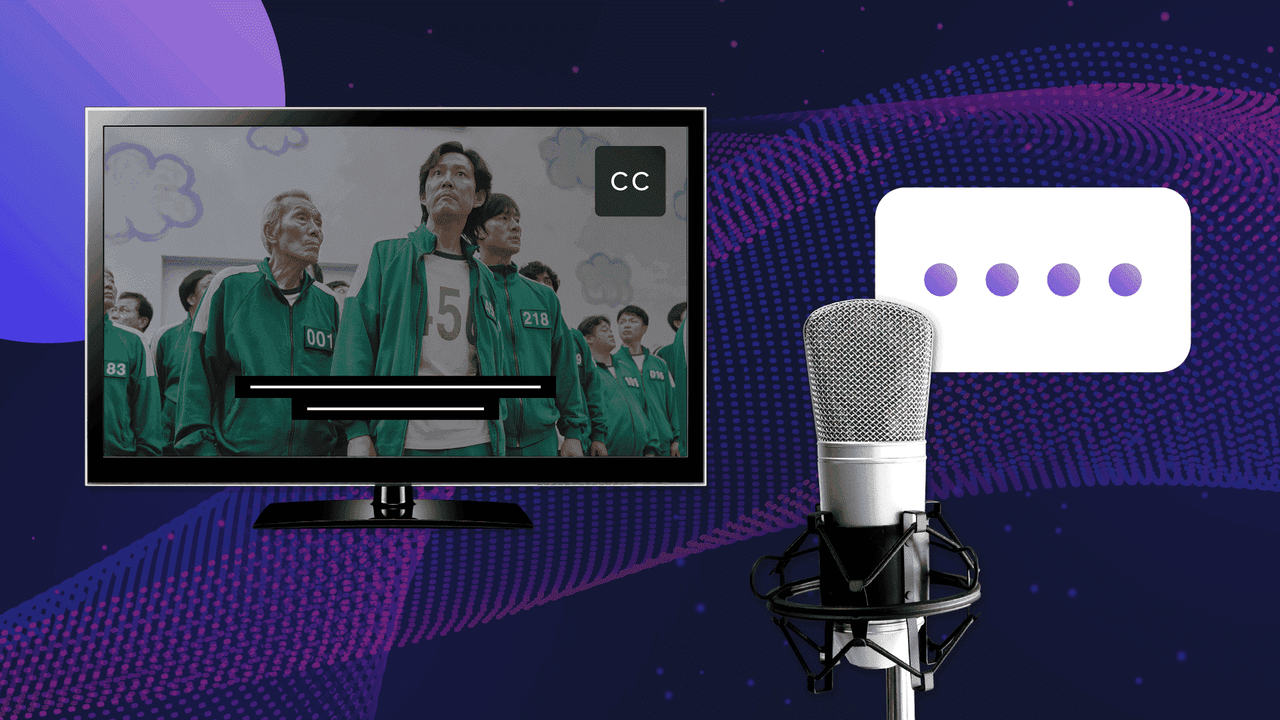
As you are here with us to read this article, you most likely have an interest in AI technologies and their use in the localization sector. You may have doubts about the efficiency or trustability of using machines in subtitling and dubbing solutions. Or perhaps you are one of those people who are afraid that AI will “steal” your job as a translator or voice artist. The much-desired scenario is that we are on the same page, meaning you feel enthusiastic to learn more about AI-powered dubbing. Either way, keep reading this article and then consider enrolling in “Become an AI Dubber at Ollang”, a course offered by Ollang Localization School.
Let’s continue with some numbers…
…which we hope will help you see AI technologies from a broader perspective and get everyone who questions its scalability and benefits on the same page with us.
- Global video streaming is expected to hit USD 330 billion by 2030.
- 68% of consumers prefer to speak with brands in their native language.
- The worldwide market for artificial intelligence (AI) software, hardware, and services is expected to surpass $500 billion by 2024.
- The market share for film dubbing is projected to reach USD 3,604.38 Million by 2027, growing at a CAGR of 5.60% from 2020 to 2027.
What do these numbers mean? Let’s admit upfront that we are much better than machines when it comes to creative work that requires fine-tuning and contextual understanding. As humans, we have the potential to excel at creating, innovating and reasoning but we can easily feel overwhelmed by the massive amounts of global demand for localized content. In other words, the extent of work we can produce within a limited time frame cannot meet the huge need seen in the media ecosystem for subtitling and dubbing audiovisual content such as movies, dramas, TV series and videos. On the other hand, AI is great at handling repetitive tasks at a scale and with faster turnaround times, thus making the whole localization process more manageable and affordable.
We Have a Question for You
Now, we are asking you to save yourself from preconceived notions and tell us how you would answer this question:
Think of an environment where faster, more cost-effective, and quality dubbing and subtitling is possible thanks to AI-powered technology strengthened by human involvement in every stage of the process. Wouldn’t media companies and content creators hop on the multilingual content creation bandwagon? Would they not turn to media localization professionals who bring AI and human mind together?
As a Human Translator, You Deserve the Most Creative Tools
This is a nice title when put to writing, isn't it? But we should walk the talk to bring it to life. That is why we designed OLabs not just for our project partners but also for our translators and linguists. It is a working environment in which they could have access to the most helpful tools to be more effective than ever. Video captioning and subtitling becomes more manageable, and our translator can complete their projects at quality within a shorter span of time when they use Ollang Lab, the tool pairing the best of human support with the best of AI-powered automation.
And now, we also have an AI-dubbing tool thanks to which we hope to address the lack of AI-powered dubbing solutions that make most natural, human-like voices possible. The goal of “Become an AI Dubber at Ollang” is to provide you with the training you need to get familiar with the Ollang dubbing tool as well as assess your skills to become an AI Dubber. The successful candidates will get exclusive access to our AI Dubbing projects.
Our course contains 5 episodes offered in micro-content format to ease the experience of learning. At the end of the course you will have a chance to test your skills with Ollang Demo and give feedback about your experience.
Our ultimate goal is to find authentic voices in a large number of languages, thus capturing the essence of the original. We are well aware of the fact that this is only possible with the close involvement of humans in the process. Human voice actors and actresses are non-negotiable for us as much as our translators and linguists are. We believe that there are a number of translators, editors and linguistic experts who can excel at dubbing with the support of technology.
This is an invitation to all of you who are interested in holding hands with technology and becoming a dubbing artist: Enroll in “Become an AI Dubber at Ollang” course and challenge us by showcasing your talent.
Even More Reasons Why Ai-Powered Localization Is a Game Changer
In the last couple of decades, we have observed giant leaps made by AI-powered content creation and localization technologies. Technology developed and used for humans can democratize any field related to content creation and remove not only spatial-temporal restrictions but also cultural and linguistic barriers. In this sense, AI-driven subtitling and dubbing solutions with the human in the loop will be our most reliable means to offer painless localization processes and customize solutions to the targeted markets.
According to the U.S. Bureau of Labour Statistics, the demand for human interpreters and translators is estimated to grow 24 percent from 2020 to 2030, much faster than the average for all occupations. This may come as a surprise considering the old tale claiming that AI will supplant human force in any field of occupations. However, we should remember that it is humans that enable technology to overcome its limitations. With the Human in the Loop model, human translators actively influence suggestions made by AI-powered localization tools. And in turn, thanks to continuous improvements in AI-powered translation software, translators are increasingly presented with better tools that enable them to have instant access to all relevant information and guides needed when translating.
Why Does Ollang Use AI-Powered Solutions to Globalize Content?
First, let us explain the mindset Ollang adopts as a business which puts humans at its core: think locally to reach global realms by unlocking the potential of AI-powered video captioning, dubbing and subtitling solutions. This was the starting point for us when we ventured into the language localization industry to meet the needs of TV broadcasters, film producers, podcasters and publishers. And now, having expanded our operations to the Creator Economy space, we are even more passionate about eliminating barriers that set stories apart from reaching global audiences.
While helping content creators and media companies get closer to the broader world, Ollang is leveraging its operations across different countries as well. South Korea and France are the latest markets that we have stepped in to have a strong say in the digital media landscape thanks to our benevolently disruptive solutions.
We take cutting edge technologies developed by giant firms such as Amazon, Google and Microsoft as models and build the Ollang dubbing tool on them. Meanwhile, we are working on developing Ollang's unique voices. Considering that our ambitious goal can only be achieved if we rev up the scale and efficiency of the services we offer, we should create the most fruitful environment for human translators and dubbers to work in collaboration with AI.
In a Nutshell
High-quality dubbing can be achieved in a painless way, with relative ease and at more affordable prices. This will simply increase the demand for dubbing and voice artists. Localization companies which combine efficient AI automation with human translators and voice artists quality checks will be the most dependable partners for media companies.
If you share our goal of finding authentic voices who capture the originality of a voice in an audiovisual content, then you are already on the board. Now take the next step and try your chance here.
Are you excited about closed-captioning your videos to enhance their accessibility and appeal to a more varied audience such as those who have disabilities? Are you trying to make a choice between subtitling and dubbing so that your content better resonates with your target audience? We are here to introduce Ollang’s universe, accompany you in every stage of your global growth journey and get you a bit closer to the huge world each passing day.
Start now or contact us at marketing@ollang.com.