


During the last decade, we have witnessed an impressive development in artificial intelligence (AI) technologies, all being fueled by the most innovative minds. Systems automated by the use of AI have proven to be great at managing repetitive tasks at scale, faster and a fraction of the cost. This capacity largely explains why automation is preferred as a dependable means by an ever-increasing array of fields today: speech recognition, game play sector, healthcare, manufacturing, tourism, and language localization are just a few.
The positively disruptive impact of artificial intelligence on dubbing, subtitling, and closed-captioning technologies is clear. In a market space where global video streaming is expected to hit USD 330 billion by 2030, professionals who use AI-powered localization software which is driven by human intelligence have become the most dependable partners for media corporations, broadcasters, streamers and rising stars of the media ecosystem -namely, content creators and influencers.
What Is Machine Learning (MI)?
When we talk about machines and automation, most people tend to imagine a scary future where all-potent robots rule the planet, supplanting people not only in the job force but in all paces of life. However, such ideas may distort realities and put us back from indulging in the blessings that technology presents.
Let us define machine learning in Microsoft’s terms: It is the process of using mathematical models of data to help a computer learn without direct instruction.Think of Google’s email service. Its auto-filling function gradually gets better at guessing what you want to write. It learns and internalizes your habits and offers you a more personalized experience.
What is Artificial Intelligence?
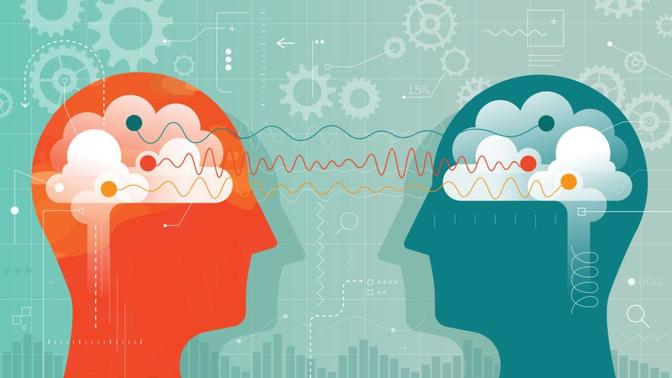
Artificial Intelligence is more like an umbrella term that includes MI as a subfield of study. Two most advanced forms of artificial intelligence are conversational and cognitive AI. The former one provides near-human-like conversation. A good example of its use is seen in the virtual assistants and chatbots which facilitate the conversation process at customer support centers. Today, conversational virtual assistants are capable of handling many of the issues brought up to them by customers. As for the matters that virtual assistants fail to address, the process is smoothly switched to humans who speak to the customer and solve their problems. As it is clearly seen, this is a process which closely includes human intervention. That’s why we call it the Human in the Loop (HITL) model.
The latter form, which is cognitive AI, is much more advanced as it is directly built on artificial neural networks that mimic the human brain. The advent of these networks has been one of the noteworthy breakthroughs in the development of artificial intelligence and forms the core of what is known as deep learning.
How Deep Learning Has Aided Artificial Intelligence Advancement
The translation and localization industry has seen the benefits of the personal virtual assistants such as Microsoft’s Cortona, Amazon’s Alexa and Apple’s Siri or the translation software such as Google translate. Although these tools are prone to making critical mistakes and cannot recognize delicacies of linguistic and cultural differences, they definitely accelerated some innovative processes and helped investors and developers realize the potential that neural machine translation (NMT) promises for the future of the translation profession.
If 1940s were accepted as the infancy stages of machine translation technology with largely relying on manually-fed data, 1980s brought more computational power, and IBM started developing systems that could learn rules from bilingual data inputs. The first examples of the tools were word-based systems, thus lacking the context and environment in which a text was constructed. The next stage was built on a phrase-based system which could process chunks of phrases rather than single words. These days, we have thankfully switched to neural networks that can take multiple parameters to translate data.
The Human Involvement Is Non-Negotiable
IBM explains that neural networks, also known as artificial neural networks (ANN), are inspired by the human brain as they mimic the way that biological neurons signal to one another. This approach has been a milestone in the iteration of the machine translation by leading software engineers to develop the Neural Machine Translation system. As it is powered by a close interaction between machines and human feedback, the outcome results in a more natural-sounding translation with well-captured meaning and more accurate sentences.
Humans intervene when the time comes when AI needs to be trained. In other words, a humans-in-the-loop (HITL) approach is crucial to build high-quality AI systems. This is a model wherein AI and MT are developed with human interference at necessary stages of the process. Despite the time, money and energy it takes, scientists and software developers prefer the human in the loop approach in which data is created and labeled by humans. Such structured training data are then fed into the ML algorithms and models. The role of humans is not only to provide necessary data, though: once neural networks recognize these datasets, humans take on the task of fine-tuning the models. Further validation by humans ends in high-quality AI systems which can be utilized in any area of life from healthcare and manufacturing to the communication and translation industry.
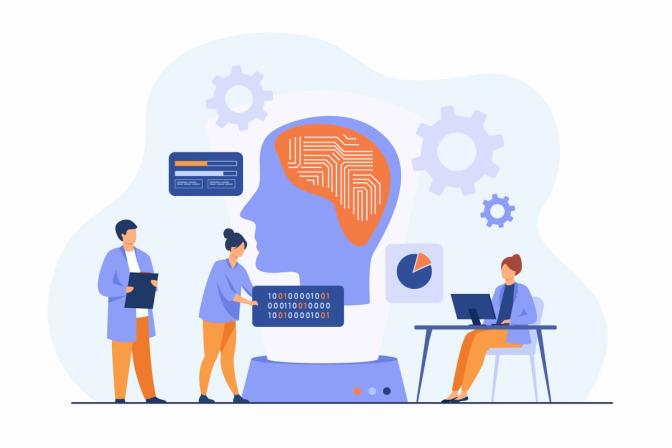
We should bring the “bests” of this dual together without failing to recognize that humans and machines excel at different skills. Machines are dependable for automating repetitive tasks at scale and faster while they fall short of managing complex tasks such as reasoning, contextual thinking and wiring information from multiple sources of knowledge. All these tasks are intrinsically linked to translation and localization processes - therefore AI-powered translation software with human interference in the loop is the recipe for not only bridging the gap between different languages and cultures but also the gap where human intelligence and machine ability arises.
So, if AI Needs Human Support, Why Is It Still Valuable?
It is important to acknowledge that AI is best applied when it is monitored and trained by people. This does not necessarily mean that it is not to be trusted with the more complex tasks; rather it suggests that AI finds its most effective use when it takes care of the more simple processes, thus allowing us to apply our human knowledge, expertise and empathy to more creative and mentally demanding tasks. Involving people in the process as a supervisor and trainer facilitates AI learning and helps avoiding potentially harmful effects of an unmonitored system would otherwise create. Relying on the machines as our assistants, leads, on the other hand, to augmented intelligence and lets us focus on acquiring new skills and putting another notch on our belt.
The Future Is In the Augmented Intelligence
Gone are the days when human translators were tearing their hairs out while sorting out the hundreds of mishaps and errors that machine translation tools created. We have come so far thanks to the advances in artificial intelligence technologies which allow all types of translations including subtitling, dubbing and captioning of audio-visual content to be done seamlessly.
In this article, we have tried to show that the future of machine translation is not as straightforward and dry as it may seem. The advancements in AI-powered technologies have not decreased the importance of human translators. It is now even more beneficial than ever to create working spaces that provide humans with the best tools they need to be more efficient.
This symbiotic relationship can bring huge efficiency improvements to the work of human translators regarding quality and speed. At Ollang, we believe future innovation will be shaped and fueled by the collaboration between humans and machines.