
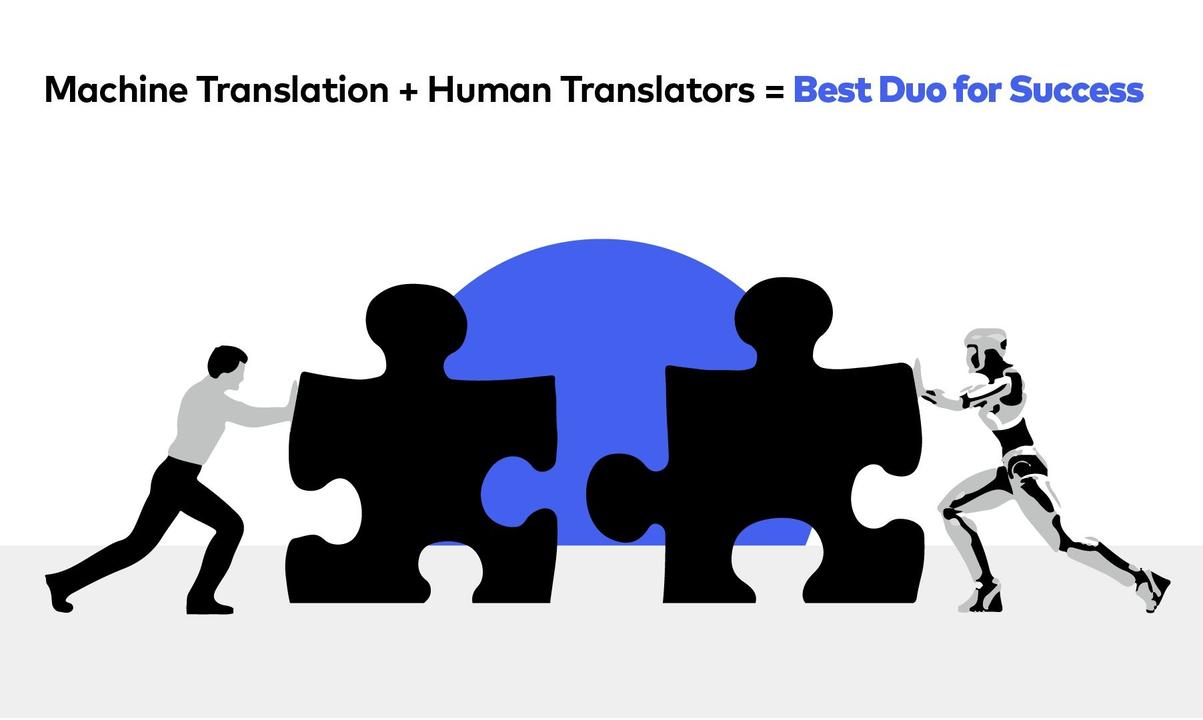
We live in a world where technology is advancing at an unprecedented rate. Businesses have realized the immense benefits of utilizing Artificial Intelligence, and, as a result, have begun integrating it into their workflow. As a professional translator, you may feel threatened by the development of AI in the localization and translation sector. However, it’s safe to claim that AI will never fully replace us or supplant humans in the workforce. With the human-in-the-loop method, there will always be a need for the human touch. That's why translators should harness machine translation post-editing (MTPE) techniques and closely pursue technological advancements. Burak Yaba, a professional translator thinks that machine translation is most useful when it comes to urgent translations, “if they (machine translations) are revised carefully by a professional.” He continues, “As far as I experienced, MTPE can save quite a bit of time … Machine translation can fail at many aspects of translation, such as context or localization, as it can’t consider many variables, such as target audience, etc., and grammatical differences between languages often result in mistranslations for the same reasons, especially with grammatically complex sentences.” This highlights the importance of MTPE clearly.
How to Enhance Your Post-editing Skills For Machine Translations?
The rest of this article presents the essentials of an effective post-editing process for AI-generated translations. Start incorporating them into your workflow from this day onward, experience the difference in the quality of your work, and boost your productivity.
Sharpen Your Editing Skills for the AI Era
Artificial Intelligence is more than just a tool; it's a loyal companion on your professional journey, always looking to help you improve. Think of Marvel's Iron Man - he created a couple of AI assistants to reduce his workload and increase his productivity. Similarly, AI is not here to replace you, but rather to cooperate with you in every step you take through your career. It is a great aid to scaling up the amount of work you produce in comparison to the work you can finish within the same time slots without utilizing automation. When machine translation takes away the repetitive and boring tasks, you can better focus on and invest more of your time in the creative and context-sensitive aspects of the project. In the long term, this enables you to gain even more trust as a successful translator who excels in MT post-editing.
Familiarize With the Content Before Starting to Translate

As is the case with every technology, AI has limitations, too. While Ollang's Universal Tool is constantly improving to facilitate the way our translators work on their projects, some unexpected errors may still arise. One of them is that the sentence in the closed captions may break into two or more lines, which leads to some mistakes in translation. When this happens, the AI-powered tool may not process the error. Luckily, as a skilled translator who works diligently and is familiar with the AI tool, you know what to do before starting the project: to watch and listen to the content you will work with. This will remarkably increase the accuracy and quality of the projects you take on.
To avoid losing the meaning of the source text while translating, you need to know the characteristics of the type of content you are translating. This could be anything from a documentary or docu-series to YouTube content or tv-series containing heavily colloquial language. Taking your time to check and understand the content you will work with beforehand is paramount for accurate translations that engage the audience. Having these tips in mind, you can perform your tasks on the Universal Tool to its full potential and provide remarkable translations.
Show Respect for Your Project
As an expert, you are the captain of your work. You must be confident in the knowledge and experience you’ve gained as a seasoned translator while not ignoring the technological advancements in your field. Do not get carried away by the idea that you are incompetent against the scalability and swiftness of machine translation. The ultimate goal is to create a perfectly balanced collaboration between AI and the human’s mind.
Use Ollang’s Universal Tool Efficiently

Knowing the strengths and weaknesses of the machine translation tool you are using (which is the Universal Tool for our dear translators at Ollang) will help you identify recurring errors and improve your editing efficiency.
It can be intimidating to start a new project with an unfamiliar translation tool. You can wonder how to spot the jobs that suit your availability and expertise or feel confused regarding the use of the technical features in the tool. “Where should I find open projects? What is the meaning of the translator’s score? How can I set my schedule so that it shows the available hours I can work as a freelancer?”
Luckily, we have a dedicated team at Ollang. We will accompany you through every step of your journey towards mastering the use of Olabs.
Ollang’s Universal Tool has different kinds of guidelines to get you familiar with the requirements of working with us. It also comes with various shortcuts and a checklist. For our closed captioners and proofreaders, we have insightful tips and guidelines as well. It is essential to master the tool to capture the errors and edit them to the highest standard possible. Shortcuts help you navigate faster in the Universal Tool while you can track your progress with the checklist hassle-free. Thus, you unlock the solutions necessitated by your project and discover answers to all your burning questions.
Embrace Localization as Your Expertise
Even though Ollang’s translators who use Olabs’ Universal Tool are lucky enough to have AI technology by their side, technology has its limitations. By acknowledging your expertise in localization, you improve the quality of your translation. Hence, you ensure that your translations accurately convey not only the meaning of the source text but also the cultural nuances and contextual specificities to offer more relatable content to the target audience.
I asked Janaina Karadavut, an experienced translator, about her challenges with MTPE. She pinpointed the difficulties caused by regionalism while translating from Turkish to Portuguese. She told me she needed to try to understand the dialect-specific nuances that are observed in different regions across the country. "Last month, I worked on two different TV series broadcast in Turkish television. One of the stories is set in Black Sea Region and the other is in Mardin Province. Even by using the MTPE, it required a considerable amount of research about the regionalisms in Turkish as well as the lifestyle and culture of the different regions. It was a challenge to bring these series to the Brazilian audience in an appealing manner - but the effort was worthy."
Collaborate With Your Fellow Translators
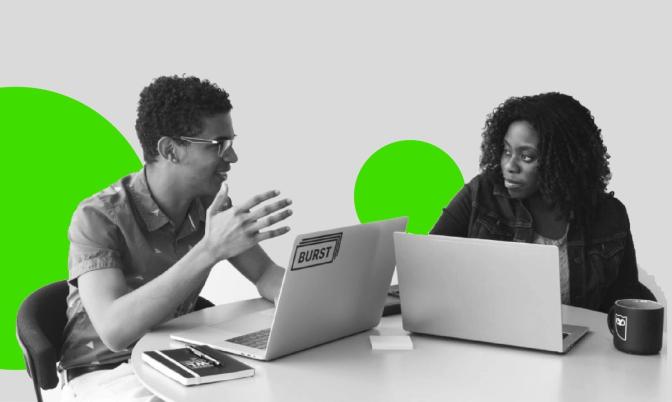
Given your shared understanding of the Universal Tool with your colleagues at Ollang, exchanging your experiences helps you learn new techniques, and discover tips that improve your MTPE skills. Make sure to collaborate with your fellow translators through helpful feedback and discussions about the obstacles you face. Equally important is to encourage your colleagues to enhance their MTPE skills, and acknowledge a fellow’s high-quality work.
Our team is ready to get you on board and provide a place where you can meet other professional translators who are familiar with machine translation. You can start your journey with us here today.
In a Nutshell
Darkness can rule over humans if they do not know how to master machine translation post-editing efficiently and effectively.
Analyzing the output is the first essential step. Some outputs can be of good quality, requiring only minor changes. However, if the output is poor, you may need to restructure sentences or add and change missing/wrong information.
As an expert in your field, integrate your expertise in machine translation. Bring your wealth of knowledge and experience to machine translation and master MTPE. It is a key factor in ensuring the final output is of high quality and accurately reflects the source message.
While machines can improve themselves by collecting data and feedback, humans are also able to do that. Using feedback from clients, employers, and reviewers to continuously improve your skills in machine translation post-editing helps you learn from your mistakes and grow out of them. Having more efficient MTPE workflows does not need to be an insurmountable challenge for you.