


Podcasts, a staple for decades, have garnered global audiences. Despite their long-standing appeal, their reach was confined by the audio-only format. However, a resurgence is underway as podcasts embrace video content. Social media serves as a pivotal connector, bridging creators and content owners with their audiences, fostering interactive engagement among viewers.
Unlike the somewhat closed ecosystems of audio-only formats and podcast streaming services, which limit global reach, the incorporation of video expands the horizons for content creators to connect with broader audiences.
Unleashing Podcast Growth through the Power of Video
The article "Podcasters First Wanted Your Ears. Now They Want Your Eyes Too," as highlighted by Morning Consult, underscores a compelling business case for video podcasting. Intriguing data emerges, revealing that among active podcast listeners (those engaged within the last month), 46% express a preference for video, surpassing the 42% who favor audio-only.
This shift signals the emergence of a fresh audience that leans towards "watching" podcasts. Consequently, significant implications unfold for podcasting platforms, social media channels, and podcast creators alike.
Unveiling Essential Questions: Answers You Can't Overlook
YouTube is actively strengthening its presence in the podcasting realm, raising questions about its potential to rival established platforms like Spotify and Apple Podcasts. The term "Podcast Watchers" refers to audiences who prefer watching, rather than just listening, to podcasts. This demographic shift signifies a pivotal moment for the podcasting industry, presenting creators with the opportunity to tap into broader audiences on platforms like YouTube and TikTok.
As the podcasting landscape matures, creators face the prospect of reaching larger and more diverse audiences. Platforms such as YouTube and TikTok open new avenues for content dissemination, but recognizing the potential requires adaptation to diverse languages. The question arises: Can podcast creators seize these opportunities by tailoring their content for multilingual audiences?
In contemplating the trajectory of the podcasting landscape, it's evident that the industry is at the brink of significant growth. The rise of localized podcast content in multiple languages signals a dynamic future, where creators have the potential to connect with audiences on a global scale. Adapting to linguistic diversity becomes not just a choice but a strategic move in unlocking the full potential of podcasting in the evolving digital age.
Podcast Watching: Broadening Horizons in the Podcast Market
The podcasting landscape is undergoing a notable shift towards a hybrid model, where visually engaging podcast videos are gaining popularity on platforms such as YouTube and integrated services like Spotify.
As highlighted in the Spring 2022 report from Cumulus Media Podcast, the growing trend of podcast watchers has led to a remarkable 10% expansion of the podcast universe.
Interestingly, the survey identifies "Newcomers" as the primary segment embracing podcasts with video components, indicating a preference for a more visually immersive experience. In contrast, "Heavy Listeners" and "Podcast Pioneers," encompassing those with four or more years of podcast engagement, continue to favor the traditional audio-only format, demonstrating a resilience to the visual shift within these more seasoned audience segments. This nuanced understanding of viewer preferences sheds light on the evolving dynamics within the podcasting audience.
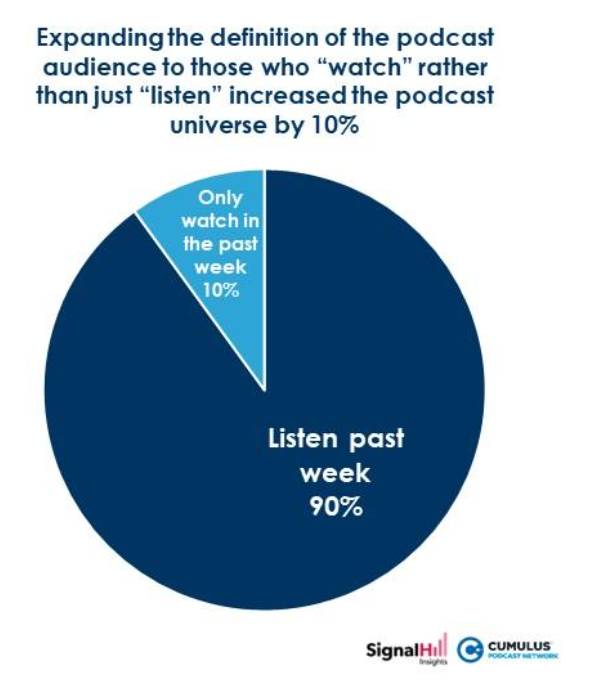
Interpreting the Survey Results:
The integration of video components into podcasts not only enhances their visual allure but also brings about several advantages. One notable benefit is the heightened discoverability facilitated by algorithms on platforms like YouTube, expanding the reach of podcasts to a broader audience. This, in turn, opens up additional revenue streams for both podcast creators and the hosting platforms.
The hybrid podcasting model, encompassing both audio and video, seamlessly aligns with the flourishing creator economy. This digital landscape thrives on the intimate connection between creators and fans through various mediums, including videos, short clips, and live streaming. The addition of visual elements allows podcast audiences to forge a stronger connection with the presenters. The ability to see facial expressions and body language complements the auditory experience, elevating overall engagement and making it more immersive and impactful. In the absence of visual elements, the depth of the podcast experience might undergo a certain diminishment.
Shifting Dynamics: Could YouTube Dominate the Market with Video Podcasts?

The surging interest in watching podcast videos is poised to drive substantial growth in the podcast industry, influenced by key factors like the integration of the Internet of Things (IoT) and artificial intelligence (AI) in podcasting platforms. The availability of original programs in multiple languages, facilitated by localization methods such as subtitling, dubbing, or voiceover, further contributes to the industry's expansive trajectory.
In the above-mentioned survey conducted by Cumulus Media Podcast, respondents were asked about their preferred platform for "listening" to podcasts. The results revealed that 24.2% chose YouTube, closely followed by Spotify at 23.8% and Apple at 16%. Notably, YouTube has exhibited consistent growth, rising from 14% in 2019 to 24.2% in 2022 over the past four years, despite its initial design not being centered around podcast services. YouTube now lets users in the US shift their podcast subscriptions from Google Podcasts to YouTube Music, aiming to centralize podcasts on the YouTube Music platform.
These findings underscore a significant link between people's preferred engagement style with podcast programs and the platforms they opt for. YouTube emerges as the platform of choice for podcast watchers, appealing not only to traditional audio-only podcast audiences but also to those who prefer the visual dimension of podcasts. This popularity has positioned YouTube ahead of Spotify and Apple Podcasts in the race for podcast dominance.
Recognizing the ascent of video podcasts as a top-of-funnel growth strategy, Spotify has responded proactively. The introduction of the new Spotify for Podcasters empowers creators to upload or record video podcasts, incorporating interactive features like Q&A and polls, while advanced analytics facilitate monitoring show growth. Furthermore, strategic partnerships, such as the collaboration with Riverside.fm, enable podcast programmers to record high-quality audio and video podcasts from any location.
In essence, the ascent of video podcasts is reshaping the podcasting landscape, prompting platforms like Spotify to innovate and adapt to remain competitive in this dynamically evolving market.
Unmatched: Why YouTube Reigns Supreme for Content Creators
The rise of video podcasts addresses a prevalent challenge faced by podcast creators: the struggle for discoverability among new audiences. Unlike closed systems such as Spotify, YouTube provides content creators with the opportunity to connect with broader and more diverse audiences. This includes individuals who may not be regular subscribers to dedicated podcast streaming services.
While the expanded reach on social media is indeed beneficial, the real game-changer for better discoverability lies in the recommendation algorithms employed by these platforms. Fueled by AI, these algorithms intelligently suggest podcasts to audiences likely to enjoy and subscribe to them. This not only broadens the potential audience base but also enhances the chances of sustained growth and engagement for podcast creators. The synergy between social media's extensive reach and AI-driven recommendations presents a powerful solution to the discoverability challenge
What’s Next For Podcasters?
To thrive in the dynamic landscape of the evolving podcasting industry, creators must proactively embrace the emerging trend of adopting a hybrid model. Key considerations for monetization and growth include:
1. Incorporating Video Components: Adding visual elements to audio-only podcasts is crucial to capturing the attention of the growing audience known as "podcast watchers."
2. Exploring Beyond Traditional Platforms: Instead of confining content to platforms like Spotify and Apple Podcasts, podcasters should explore the expansive opportunities presented by platforms like YouTube and TikTok.
3. Collaborating with Influencers: Bringing on board content creators, celebrities, and influencers as podcast guests can significantly enhance visibility and attract new audiences. Collaborative efforts with other podcasters also offer mutual promotional benefits.
4. Focus on Popular Genres: Staying attuned to the popularity of specific genres, such as educational podcasts and mood-lifting programs, enables creators to cater to the evolving interests of their audiences.
5. Embracing Multilingual Podcasts: Breaking away from producing content solely in English and localizing podcasts for diverse language-speaking audiences can set creators apart and attract a more global and varied listener base.
In Conclusion
The advent of "podcast watchers" has transformed the podcasting landscape, introducing a visually engaging dimension. This has intensified competition among streaming platforms, including YouTube, Spotify, and Apple Podcasts, vying for the attention of podcast creators, brands, advertisers, and international audiences.
As video podcasts gain prominence, creators must experiment with diverse styles and stay abreast of evolving trends to maintain relevance. Assessing platform functionalities, forming strategic partnerships, and diversifying revenue streams are pivotal steps for success.

A potent strategy for revenue diversification involves localizing original podcast content with multilingual subtitles and dubbing. Choosing the right localization method, considering factors like target audience, subject matter, podcast format, and available resources, is crucial. Collaborating with professional media localization companies like Ollang ensures accurate, engaging, and relatable content for international audiences.
AI-powered solutions, such as Olabs, empower podcast creators to streamline localization projects, effectively reaching global audiences.
Podcasters must adapt to the evolving podcasting landscape by incorporating video elements, exploring new platforms, and embracing multilingual content. These strategies enable creators to capitalize on the opportunities presented by the expanding global audience base.