

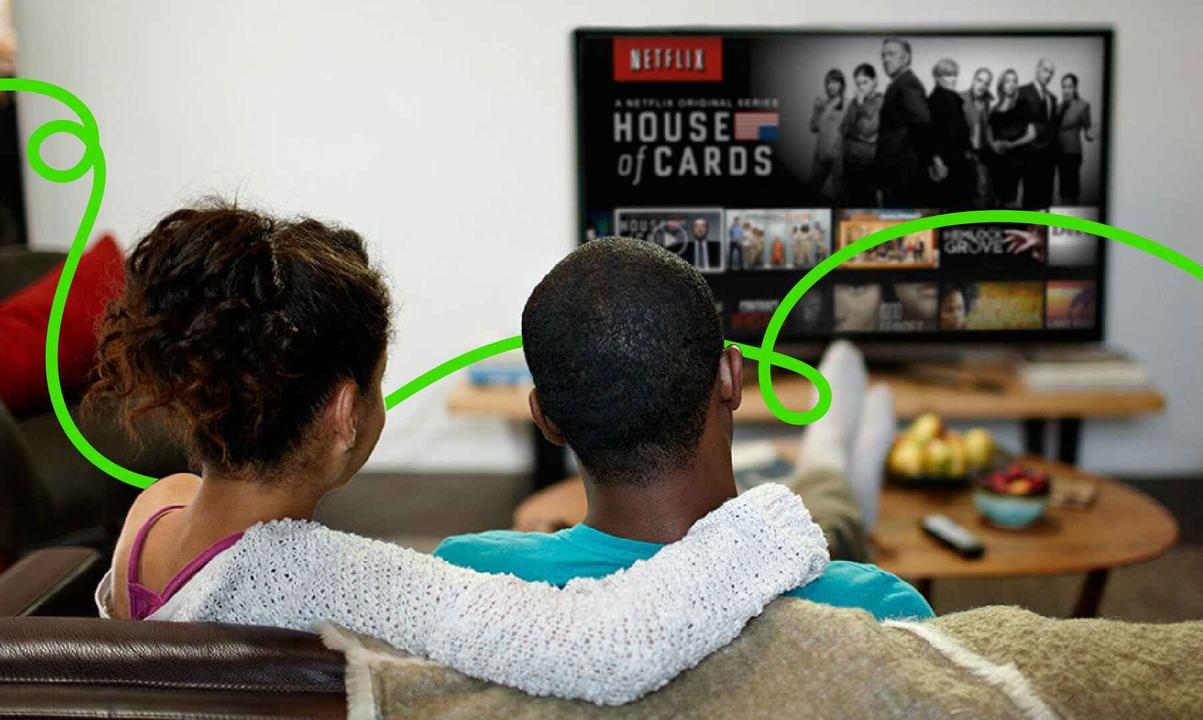
Streaming media has seen massive shifts in the last few years. More people than ever before are watching movies and series and listening to music online. They are using social networks to stay connected to the world and embracing digital tools and content as a new way to learn, educate, and work. It is now easier to reach premium content anytime and anywhere, from the comfort of your home and screen of preference—whether it be through PCs, smartphones, or tablets, or connected TVs. Ubiquitous digitalization is obviously transforming the media and entertainment industries.
Netflix etc. have amassed huge numbers of subscribers recently, claiming a big share of the revenues gained from streaming. Also, social media giants like Facebook, YouTube, and Instagram are gaining traction on the video consumption front by offering users, creators, and fans an array of options to upload and share visual content.
COVID-19: A Catalyst for OTT Services
The established order of the media, previously dominated by TV broadcasters, film studios, and large news corporations, dramatically changed due to the mandatory lockdowns during the COVID-19 pandemic. Digital media consumption saw an upsurge and reached new heights all around the world. In March 2020, when we were compelled to stay indoors, Netflix saw a considerable uptick in the number of first-time registrations for its mobile application, with percentages reaching over 50% in Italy.
People spent more time watching movies and series online, used social networks to stay connected to the world, and embraced digital tools and content as new ways to learn, educate, and work. Although concerns caused by the pandemic stayed behind and people are going about their daily lives outside as usual, video streaming continues to soar—in fact, Over-the-Top Video (OTT) services in the form of either subscription-based, ad-supported, or a combination of both have become the dominant form of entertainment in many households.
Increased interest in online content and services, changes in consumer behaviors, and widespread digital adoption have effects on future prospects for both content providers and global audiences. Players in the sector face these fundamental questions:
- How sustainable is the growth seen in the SVOD market?
- Will the number of OTT platforms increase as more countries gain broader internet access?
The rapidly changing fabric of digital media does not allow for simple, definitive answers. However, there is a clear trend that is placed at the top of predictions by industry leaders, which calls for streaming video platforms to be ready to remodel themselves for future challenges.
Subscription Fatigue: A Darkening Cloud Over SVODs?
Subscription-based video streaming platforms are likely to sustain their popularity and increase their revenue share within the global media and entertainment industry as compared to non-digital services and companies. After reporting nearly 1 million subscriber losses for the Q2 of 2022, Netflix announced gains and added 2.4 million subscribers in the Q3 and 7.66 million paid subscribers during the Q4, beating Wall Street’s forecasts of 4.57 million. By the end of December 2022, it hit 231 million subscribers globally.
Nonetheless, they may face instabilities in protecting their existing subscriber base in the face of fierce competition.They’re already pivoting on their growth strategies and working on new models to retain and attract subscribers. As an example, Netflix and Disney had begun giving hybrid models the green light by offering ad supported tiers in 2022.
Thus, platforms are coming with various subscription plans catering for different interests and budgets. Streaming giants compete against each other as well as local streaming platforms, especially in APAC countries such as China and India.
In 2022, Simon Kucher & Partners surveyed more than 10,000 respondents worldwide to understand whether subscription fatigue was a rising trend. 35% are likely to unsubscribe from a service in the next year. It was found that more than a quarter of customers had already canceled at least one subscription in the last year.
Video Streaming Is Price-Sensitive
People appear to have no qualms about unsubscribing from a platform if it fails to meet their expectations. A recent survey by SkyQuest found that nearly 60% of consumers would cancel their on-demand video service if they had to pay $5 more per month. This number hits 80% when the price increases by $10 per month. After its Q2 report, Netflix announced it would "focus on better monetizing usage through both continued optimization of our pricing and tiering structures," including ad-supported, lower-priced plans for 2023. It is clear that the price increase was the cause of subscriber loss.
People don’t consume less visual entertainment content. Video streaming is not losing its appeal. The convenience of reaching premium streams, attractive pricing options, customizable features, and the incorporation of AI technologies are some of the obvious reasons why people are unwilling to forgo video streaming. Even so, platforms are better positioned to gain momentum thanks to the rapid adoption of smart devices and cloud-based services.
The subscription fatigue simply underscores the volatility of the market and shows that people are now paying more attention to the money they spend out of their pockets. In fact, 53% of the people surveyed by Simon Kucher & Partners said they could change their decision if their subscription fee was lower, even if that meant they would watch advertisements.
SVODs Becoming Hybrid With Advertisement Tiers
What does this insight mean to content providers and owners? It’s high time to experiment with alternative monetization models such as advertisement-based video on demand (AVOD). In fact, AVOD is on the rise and is expected to grow by 144% from 2020 to 2026.
Simon Murray, Principal Analyst at Digital TV Research, said: “We estimate that Netflix will provide its hybrid AVOD-SVOD tier in 85 countries by 2028, with Disney+ in 91 countries, HBO in 55, and Paramount+ in 56. These include pan-regional services in Spanish-speaking Latin America and also in Arabic-speaking countries.”
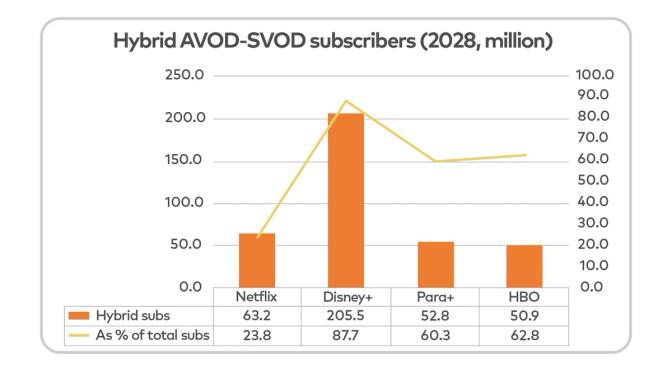
According to their findings, the number of hybrid AVOD-SVOD subscribers of these four platforms will reach 372 millions by 2028, representing 56% of their total subscriber base. As Ted Sarandos, the co-CEO of Netflix, made headlines with their plans to "offer multiple ad-supported tiers over time," estimations that SVODs will shift towards hybrid tiers make sense.
Numbers are only part of the story, though. Quality and the level of personalization are just as important. When done correctly, ad-supported streaming plans can actually keep people satisfied with the overall viewing experience. Live TV ads are quite long, and most of the time they have nothing to do with the individual viewer’s interests. Yet, a mechanism that promises a more personalized experience can create an audience that "feels more loyal to the service"—than viewers of ad-free content—according to Hub Principal Jon Giegengack.
Appealing to Demand for Original Content Matters
Massive budgets are being poured into producing original, high-quality content by major OTT platforms. Sometimes, production costs push to those of blockbusters when one considers the investments they make in scripting, casting, and distributing—last but not least, marketing the content in other countries with subtitles or dubbing it to native languages.
Among others, Netflix has been leading the way and benefits from developing local content as a competitive strategy. It started original programming with "House of Cards'' and added to its catalog some memorable series including the Spanish Original Netflix "La Casa de Papel" and South-Korean drama "Squid Game." Encouraged by the high watching times for said shows recorded, Netflix subsequently decided to dub the two into English, which has become a trend for almost all "foreign" originals. Other well-known SVODs, such as Hulu, HBO and Disney+, have also begun to develop their own catalogs of content. It is safe to assume that the said platforms will continue to invest in producing original content for countries with high growth prospects.
A Smarter Way to Repurpose Content for Global Audiences: AI-Powered Subtitling and Dubbing
Shooting original content is not the only way to reach global audiences in their own languages. In fact, the way streaming giants adopt is beyond the means of most smaller content providers and owners including TV broadcasters or e-learning platforms. Localizing existing catalogs with subtitling and dubbing is a more manageable method.

Subtitles in Narcos. Netflix.
For a localization project to be successful, content owners and their localization partners should consider factors such as the consumer habits of the targeted audience and the type of content to be localized—does it come with both a universal theme and local appeal to work well in that specific country? and the right method for localization. For example, France is more accustomed to watching dubbed content than reading subtitles, much like Spain and Germany. As for the genre of the content, although most streaming time is spent watching films, when it comes to the second and third most watched categories, differences matter. When one knows and pivots their strategy on the knowledge that documentaries are more popular in Germany, the Netherlands, and Brazil, they can fill a void and explore an untapped audience by subtitling or dubbing their original content into their native language.
Localization solutions powered by artificial intelligence like those we offer at Olabs lower entry barriers to the market for many businesses by reducing delivery times and localization costs. Our seasoned translators and AI-dubbing artists revise and edit the automated version produced by artificial intelligence. This makes it possible to generate accurate translation and natural-sounding voices free from overlaps and a robotic feel.
Streaming media is facing challenges; however, those who recognize the opportunities offered by technological developments, approach them with a flexible mindset to try new monetization strategies, and deliver quality content in multiple languages will future-proof their businesses.