
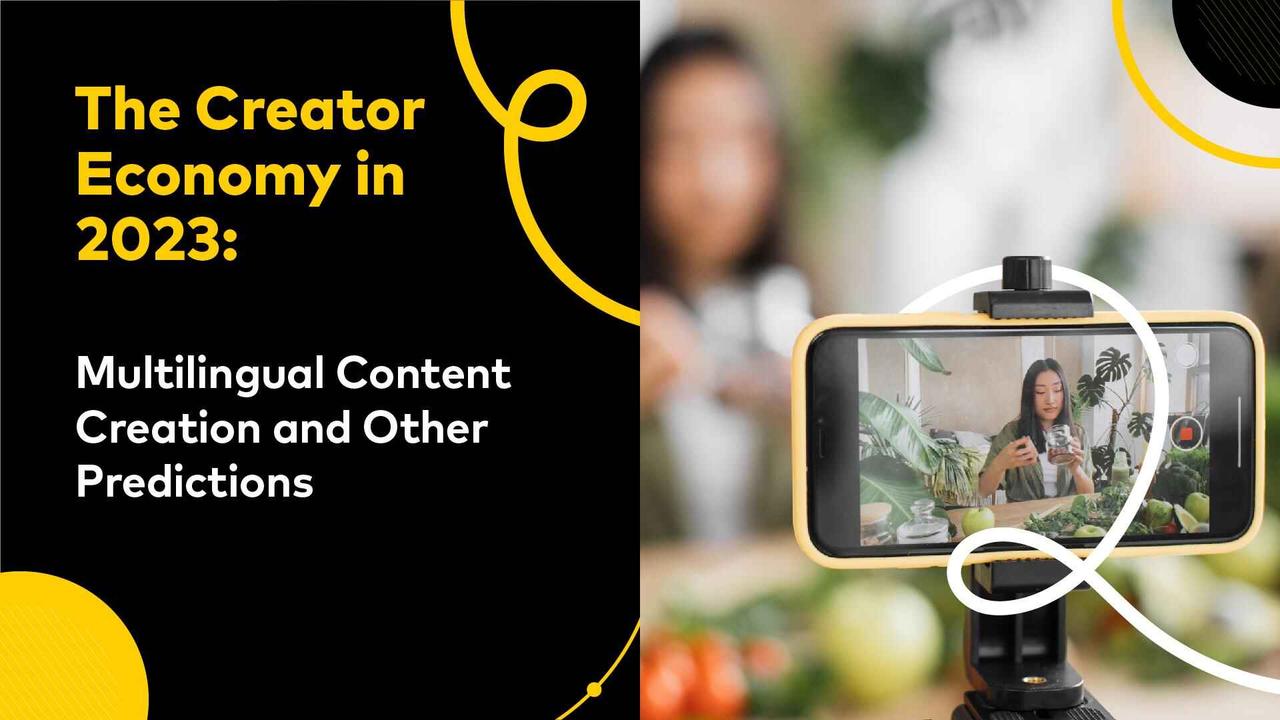
As we go through 2023, the creator economy continues to make headlines. Despite this, some argue that it has begun shrinking due to the looming financial constraints. There may be clouds hovering over it, but it has not lost its power as a viable way for both creators and companies to reach larger audiences and expand their businesses. In one recent article, Jasmine Enberg from Insider Intelligence shared interesting insights, shedding light on the future of the ecosystem. Below, we will reflect on the implications of some of these predictions. We will also highlight a recent development that goes unmentioned in the said article. The localization of creator content with dubbing. With YouTube's recently launched Multiple Audio Track, the topic deserves to be included among our predictions.
Key takeaways from Jasmine Enberg:
➸ According to commonly cited figures, the creator economy was valued at $104.2 billion in mid-2022.
➸ A new Adobe analysis suggests that there may be as many as 300 million creators worldwide, which is significantly more than the 50 million creators that VC company SignalFire predicted would exist by 2020.
➸ Investments made in creators and creator-focused companies dropped by around $1.5 billion in less than two years.
➸ Creators are looking to start their own businesses rather than relying solely on brand sponsorships and advertising revenue. As a result, we might see more creators establish themselves as full-fledged enterprises with their own teams this year.
A Space Where Roles Are Constantly Changing
The Creator Economy is a dynamic landscape. Key players include creators, fans, and consumers; advertisers; social media platforms; investors; as well as a broad range of businesses and startups that provide services and products to creators. Creators come in various forms, such as vloggers, photographers, writers, online course trainers, social media influencers, and more. Stronger bonds established between a creator and their following bring a deep-seated following, increase the chances of widening outreach, and help them get discovered by brands, companies, and even investors.
From Blogging Platforms to Social Media Behemoths
When and where did it exactly begin? As opposed to what most may think, the phenomenon of the creative industry has a history spanning more than a decade, and its roots go back to the 1990s, when blogging platforms were born. In the late 2000s, social media platforms like YouTube, Instagram, iTunes, Spotify, and more recently, Snapchat, Twitter, Medium, Twitch, TikTok, etc., stepped into the scene. As "real people" began to appear in ad campaigns, the concept of traditional celebrity culture drastically changed and gave itself over to a culture of influence. Brands and marketers quickly recognized that creators and influencers could impact purchase decisions and bring their products to the attention of consumers. Social media platforms amass millions of followers and billions of video views. No other platform or space can compete with the massive world that social media opens up for creators and influencers to get discovered and thrive. Then, why do 39% of respondents aspire to become business owners one day, according to Adobe’s Future of Creativity survey?
Creator-Owned Businesses Are on the Rise

Earning a living off of advertising revenues on their content is out of reach for most creators. Nano, micro, macro, and mega creators and influencers, as they are called within the market, are the tiers that form different classes of the community. Mega creators earn a decent living off of the ad sharing system on social media platforms; however, the "middle class" of the creator economy —as Li Jin writes— looks for ways to diversify their revenue streams in an effort to monetize their content without solely relying on advertisement gains. Some creators use more than one platform to weather the volatility of ad-sharing systems. Some expand their brands into e-commerce with merchandise and products. As mentioned above, Insider reporter Jasmine Enberg predicts that this trend will continue to shape the ecosystem. Lists of influencers and creator turned entrepreneurs are simply an evidence to this insight.
Creator-Focused Companies and Talent Management Agencies
Creator-focused startups and entrepreneurial companies develop tools and offer services with a focus on creator empowerment. They support creators and influencers to get paid fairly and on time, and they take on operational and legal burdens off their shoulders. A list curated by InfluencerMarketing Hub ranks Huddles, Only Fans, Beacons, BRUSHWRK and Buy Me A Coffee among 41 top creator-focused companies that are worth noting. The arrival of talent management agencies should not be underestimated. Gushcloud, Jellysmack, and The Ministry of Talent are some well-known companies that serve as negotiators by matching brands with the right creators and influencers. The owners and founders of most of these agencies are also themselves creators or have a background in the creator economy. If taken seriously, these initiatives can help overcome problems related to monetization, inefficient workflows, unfair payments, and a lack of a level playing field to build sustainable creator careers.
What Do Declines in Investment Mean?
Jasmine Enberg pinpoints a shrinkage in the investments that have been made in the creator economy since the last year. Is the interest in the creator economy shrinking amongst venture capitalists? This is not the case, according to Amanda Silberling. Budget constraints, the impending financial crisis, and the ecosystem's rapid change may have created qualms about investing decisions. However, this may also be a strong sign that the investor community has just been taking it slower, choosing creators and businesses with greater care, and looking into new industries where the creator economy will grow. In a previous article, we highlighted four essential factors that investors should pay attention to before making their investment decisions. Megan Lightcap, an investor and principal at Slow Ventures, told us where they find the right talent. "We look to partner with creators that sit within a niche or vertical where they have outsized authority in that category. With this authority comes a deep level of consumer trust, which ultimately drives what we believe to be interesting commercial opportunities." She believes that it's a lot easier to optimize for category-focused content in comparison to entertainment, which uses pure attention as a competitive edge.
Multilingual Content Creation for Creator Videos
We predict that localizing creator content into multiple languages with dubbing and subtitling will prevail through 2023 and well beyond to appeal to a worldwide audience. Today’s audience desires to interact with the knowledge and stories in a more relatable way, capturing a "native-like" feel. You cannot shoot each video from scratch for different languages, but you can repurpose your original content by adding multilingual subtitles and dubbing.
Ollang’s localization software, Olabs, combines AI technology and professional editing with a perfect human touch. To ensure your stories in their new languages are as captivating as the original, we customize the localization process for creator content by partnering with a wide network of dubbing studios around the world. In other words, AI-powered localization is not an "all-or-nothing" approach for us but a mindset that leverages technology for and together with humans.
YouTube’s New Localization Feature Confirms Our Prediction
By using Multiple Audio Track, a new tool that YouTube just launched, it’s now possible for creators to add multilingual voice tracks to new and existing content. The platform started testing dubs in multiple languages with a select group of creators last year, including Mr. Beast. With this feature, YouTube aims to create more embracing experiences for viewers while helping creators expand their outreach. It is also a win for the platform because the feature promises increased viewing times and engagement from different parts of the world for a single video. By January, the videos dubbed by using Aloud, YouTube’s machine-aided dubbing tool, generated more than 2 million hours of watch time per day.
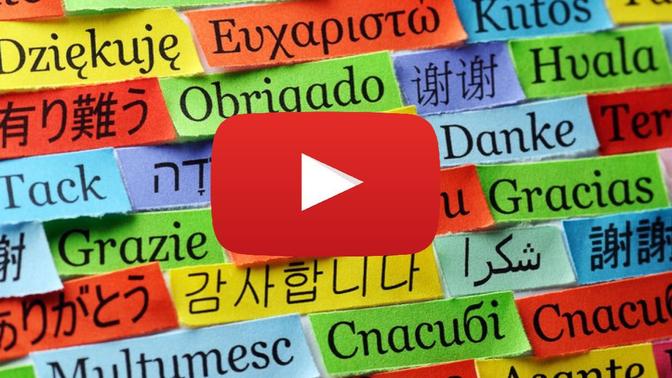
Channel management is also simplified, as creators don’t have to create separate channels in different languages anymore. Global viewers can reach the video content through the primary channel of the creator and can simply choose the dubbed version of their preferred language. Considering which language to dub, creators are recommended to track the analytics of their channels to understand from which countries their videos are viewed most.
As A Content Creator You Should Not Be Afraid of AI
Even the Insider Intelligence analysts say so. “Creators and marketers shouldn’t feel threatened by the rise of AI-generated content.” It is a good time to utilize solutions combining artificial intelligence and human touch to help us with creativity and authentic story-telling. YouTube’s new integrated feature will help more creators expand their outreach beyond local borders; however, Aloud is not at a point yet where it can sufficiently generate multilingual audio tracks in terms of scalability and quality. Another point that needs to be questioned is how YouTube decides which creators will be provided with the dubbing tool. If offered only to mega creators and popular niches for a long period of time, middle class and micro creators would be left devoid of the opportunity to explore new audiences. The platform announced that the dubbing technology was built in-house at YouTube, but creators will need to partner with professional services to add multilingual audio tracks to their videos. It seems that the best option for content creators and distributors to increase reachability and audience engagement is to collaborate with experts in content media localization to make their stories understandable in local languages.