


The way people perceive and consume media has been evolving significantly as the global flow of content is increasing through digitalization. People watch movies, listen to music and reach a plethora of diverse content online. The increase in the number of video streamers is a natural response to demand from the audience for more digital content. Also, the advent of a more conscious audience intensifies the competition. Content owners and distributors need to identify and constantly track the changing characteristics of new generations to stay relevant in today’s digital world.
Options seem endless in the video streaming space, with providers coming with bespoke technological features, pricing plans customized for different budgets and outstanding content catalogs catering for personal tastes.
SVODs are, for example, subscription-based platforms where users pay monthly or yearly fees to watch premium content without advertisements. Netflix, Disney+ and HBO Max are the giants taking the lion’s share. According to Statista, Netflix had nearly 231 million paid subscribers worldwide as of the fourth quarter of 2022.
AVODs viewers, on the other hand, sign up on platforms free but have to watch ads before or during their chosen videos. Some examples of AVODs are Pluto TV, Tubi and the Roku Channel. Social media platforms such as YouTube with millions of ad-supported videos claim their shares in this space, as well.
As promising and growing a market it is, video streaming is still not immune to the challenges. In a previous article, we deep dived into pressing obstacles that the said models are facing and suggested that their strategy cannot be static while the space is constantly transforming.
Some Options Are Still Undervalued For Video Content
While there are a certain number of dominant video streaming platforms, we can miss the fact that it is not just these platforms which are building an existence and increasing their footprint in digital.
In this article, we’ll see how video format is asserting a role on a wider front and gaining steam with new use areas.
Some undervalued players of the video market include:
- TV broadcasters claiming a seat in the digital space
- E-learning platforms; and
- Social media platforms.
TV Broadcasters
“Traditional TV viewing will become a relic of the past.” This has been the talk of the town for a long time now while streaming platforms are claiming more share of TV viewing time. Watching content in digital has distinct benefits such as ease of accessibility, the availability of diverse genres and cost effectiveness.
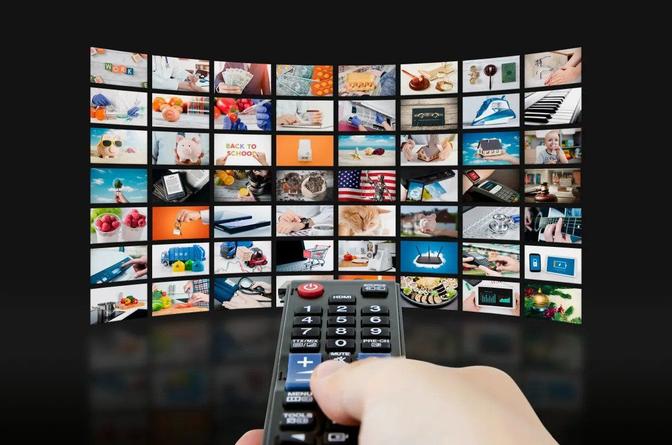
Credit: Piotr Adamowicz/Shutterstock
With that being said, TV broadcasters don’t withdraw from the competition. We see more TV broadcasters investing in their digital presence to secure a place in the dynamic, ever-evolving video market. Joint productions and distributions with other TV broadcasters and even joint streaming platforms are effective ways to weather the threat. They can incorporate the mobility into their platforms and make mobile apps available to viewers. Collaborating with OTTs may be an option that should not be disregarded, as well. They can use their platforms to broadcast their content by selling licensing rights or sharing revenues. This enables them to reach huge subscriber bases of these platforms.
Free Ad-Supported TV (FAST) is a “fast”-growing market, too. New survey results from Hub Entertainment Research found that in Q2 2022 more than half (55%) of consumers said they use at least one free ad-supported streaming TV service such as Pluto TV or The Roku Channel. According to the Variety Intelligence Platform (+VIP), the U.S. FAST market will hit $6.1 billion by 2025.
E-learning platforms
Today universities, colleges, and other educational institutions produce interactive content and communicate it via video presentations and online classes. They are effectively disseminating knowledge through the use of technology.
A report published by SkyQuest points out that the market for educational online video platforms has witnessed a growth of around +650% in the last 3 years. The primary factor driving this growth was the Covid-19 pandemic during which education moved to remote, thus forcing educators, institutions and companies to innovate and create engaging learning settings online.
With the pandemic now behind us, schools and learning institutions are now actively going back to in-person education. However, what we see now is that the way we learn and teach has completely changed. More and more people recognized the benefits of online learning: it is simpler to access video content from anywhere and at any time; you can watch videos on your preferred device; reach insightful materials and courses at more reasonable rates; and engage with a community of learners through live streaming and interactive features embedded in the content.
Creating accessible learning environments is mandated by laws in most countries. By catering for visual learners and adding closed captions to the videos, learning content creators and educators are able to reach a much wider learner base and provide more embracing learning environments. By localizing their courses and materials with subtitles in multiple languages or via dubbing, they can remove the barriers put by linguistic differences and appeal to global audiences.
Social Media Platforms
User-generated videos are growing meteorically on social media platforms. New features added to the platforms and content diversification in the format and tools available to content creators are propelling this growth even further. Viewers share their experiences and comments, thus engaging with the content owners and other viewers.
By 2024, it is estimated that people will spend nearly 60% of time on social platforms to watch video, accounting for 9% of all digital time spent. Moreover, video content is one of the most effective ways to build and strengthen a brand’s ties with its customers and community. Video increases the retention rate, thus making it easier for people to understand a brand’s products and services. The retention rate is nearly 95% according to the marketers leveraging social media video marketing.
The rise of the Creator Economy has been an important catalyst for video content growth on social media channels such as YouTube, Facebook, TikTok and Instagram. These platforms have evolved into the main circuit where a number of creators and influencers share videos and build communities of their own by engaging with their fans. Through brand sponsorships and ad revenues that the platform shares with the creator, the creator economy has seen an exponential growth and no signs as to its slowing down are on the horizon. Bright prospects promised by the creator economy are under the radar of venture capitalists, as well. Some are investing in startups and companies serving creators to create, distribute and monetize their creative efforts while others directly monetize the creator themselves. As an example, Marina Mogilko raised funding from Slow Ventures and has grown her follower community by dubbing her English content to Spanish and Italian.
An Impressive Growth Trajectory With Multilingual Content Production
According to a Digital TV Research report, global revenues from OTT TV movies will reach $224 billion in 2027; up from $135 billion in 2021. SVOD services will push its global subscription base to 1.68 billion by recording an increase of 475 million between 2021 and 2027. While six US-based platforms will account for 47% of the world’s total in 2027, Netflix will remain the revenue winner, with a projected revenue at $30 billion by 2027.
Having become an industry worth billions of dollars, the global video streaming will continue to sustain its popularity among audiences. However, all market participants should take the trends and forces shaping the ecosystem into account. While major SVODs should offer more affordable subscription plans for their subscribers, TV broadcasters and social media platforms should launch their own video tools, innovate and experiment with new concepts to cater for varying audiences.
They are creating channels on YouTube and uploading their series previously broadcast on TV, thus maximizing the content they already have and earning more revenues. Even some more forward-looking ones are taking one step further and have already started localizing their content into other languages with subtitling or via dubbing to appeal to a broader viewership.
The dubbing market comes with its own challenges, especially for the small-scale companies, including high production costs, prolonged delivery times and a shortage of translators and voice artists. AI-powered dubbing boasts, on the other hand, lower production timelines and costs. The concerns that AI-powered voicing will not ring true for most of the genres (such as comedy or drama) cannot be entirely dismissed at this point because this technology has limitations just like any other technology. However, end-to-end AI dubbing solutions that are managed and refined by humans can put this technology to productive use.
With quality video content being produced all around the world, it is to platforms and creators’ advantage to opt for manageable and accessible ways to make their content reachable to global audiences via AI-powered subtitling and dubbing solutions, especially for certain genres such as documentaries and children’s shows.
Cover Image: Shutterstock