

It seems that audiences everywhere are driving the demand for more South Korean cultural content, including countries not only in Asia but also across Europe, North America and the United Kingdom. An indispensable part of this cultural landscape is made up of K-dramas, K-pop music and K-movies. The K-content phenomenon creates important implications that content producers, creators and distributors as well as professionals specializing in localization solutions should consider.
What is the reason which makes South Korean movies, dramas and shows universally appealing and how can this momentum be maintained? What kind of governmental and entrepreneurial strategies propel the expansion of South Korean culture around the globe? What is the best localization strategy when it comes to offering K-content to international audiences: subtitling or dubbing?
Hallyu
The ever-growing demand for K-content has its roots in the Hallyu, a term coined by Japanese journalists in the 1990s to pinpoint the global popularity of South Korean cultural exports especially in terms of K-drama, K-movie and K-music. Elsewhere, Ollang’s content room dived into the key drivers leading to the Korean Wave, namely the Hallyu. This well-rounded article exemplifies the first Hallyu-led movies and dramas as well as explains the important role the South Korean governments have played since the end of the 1990s to position South Korean culture as the “soft power” of its national economy. Reading this article, you will find answers to the questions brought forward above.
The article you are reading now, in comparison to the above-mentioned one, offers a statistical portrayal of the current cultural content tendencies and consumption habits observed in South Korea. With this, we wish to help content production and distribution companies as well as individual content creators figure out the endless growth opportunities that South Korea's content space promises. No matter where you are regarding your plans to launch operations in South Korea, this non-exhaustive compilation will be your dependable point of reference. As for K-content fans and audiences; you could also immensely benefit from continuing reading because discovering the entire landscape that brings unique K-stories to your screens is as exciting as watching them.
1. General Look: Cultural Content Industry Trends
The size of the K-content market is projected to reach USD 70.9 billion by 2023, which will make it the 7th largest within the global cultural content ecosystem. A consistent strategy and government support for years to promote Hallyu plays an important role in the growth of South Korean content space. There are three primary factors that form the country’s general content market trends: sales, exports and employment. According to the Ministry of Culture, Sports and Tourism, the share of the sales saw KRW 128.3 trillion, equalling 4.9% average annual growth rate (AAGR) for over five years. Exports accounted for USD 11.92 billion, with a 18.7% AAGR between 2016 and 2020. The employment rate saw 0.4% AAGR, with 642,000 people pursuing careers in the cultural sector. The genres dominating the industry in terms of sales were broadcasting (KRW 22.0 trillion) and publishing (KRW 21.6 trillion), respectively. Gaming industry explains the largest share within exports, equalling USD 8.19 billion, immediately followed by broadcasting, bringing a revenue of USD 692.790.
2. Streaming platforms
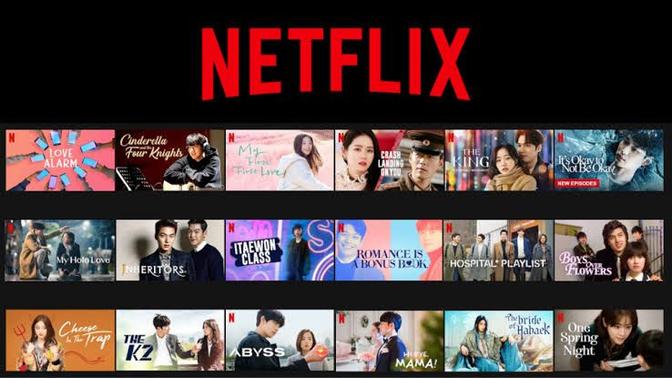
As Korean Wave has taken the globe by the storm, international streaming platforms such as Netflix and Disney+ did not fail to grasp the moment of opportunity and launched operations in the country. In addition, Korea’s homegrown Wavve, Watcha and Tving have revved up, built partnerships and enriched their catalogs of content. As you can realize, a fierce competition is taking place in this field.
Kakao M, an affiliate of Kakao social media platform, launched Talk TV in 2020 with a focus on short video clips. It aims to compete with TikTok, Youtube and the likes which offer tools to create short video formats for creators and companies. Rakuten Viki, Cinedigm’s AsianCrush and the Kocowa venture are among major Korean broadcasters, with a large amount of international viewership.
With the recent entry of Disney Plus and Apple TV Plus to the South Korean market, 2022 has passed even more challenging for Wavve, Talk TV, and Netflix Korea, and this explains why Netflix has been putting a lot of money into gathering as much K-content onto their platform as possible. Reportedly, South Korea is now one of Netflix’s largest markets in Asia.
The increased investments in dubbing and subtitling services by these streaming services streamline the delivery of the Korean and pan-Asian movies, TV shows and music to far-flung markets including Brazil, Colombia, Turkey and the U.S.
3. Content Localization
2020 and 2021 were magical years for the South Korean entertainment industry, with successes abroad. Hollywood interest in Korean content reached new levels when “Parasite” won Oscar for Best Picture at the Academy Awards in 2020. Korean dramas and movies began appearing everywhere, breaking one record after another. “Squid Game”, “Hellbound”, and “All of Us Are Dead” - just to name a few. As Netflix and the likes expand international programming, dubbing helps make more shows and films accessible to viewers around the world.
For example, more people chose to watch “Squid Game” dubbed over the version voiced by its original cast in Korean. “Kingdom” and “All of Us Are Dead” are other series which international audiences can enjoy thanks to subtitles and dubbing. According to the Los Angeles Times, the former was subtitled in 29 different languages and dubbed in 13 languages. The latter was dubbed in languages including English, French, Spanish and German, and subtitled in 31 languages.
4. Internet Usage
We live in a digital world in which high-speed internet, high usage of mobile internet and the social media engagement habits can make a country a lucrative area for foreign companies to expand into when looking for new businesses. South Korea is exactly one of these countries. Here is some highlights: Highest average internet speed worldwide. A nationwide 5G network. An internet adoption rate of 98% as of the early 2022. 50.29 million internet users at the beginning of 2022. An uptake in the number of internet users in the country by 543 thousand between 2021 and 2022.
5. Social Media Usage Trends
As one of the best-connected countries in the world, South Korea is a dynamic, ever-evolving meeting point for social media platforms and users. In February 2022, the estimated number of social media users was 46.81 million, pointing to an increment of 1.0 million over a year. On average, South Korean people spend 1h and 13 mins of their day on social media, swapping among 4.9 platforms. Such high engagement with social media platforms is most likely to be a reason why many foreign companies are looking to penetrate the Korean content production and distribution market.
In addition to the internationally prominent social media platforms such as Instagram, Facebook and TikTok, the country is home to several local networks as well. An example to this is KakaoTalk, which was born following the merger of two major Korean digital service providers and has by today earned a sizable slice of share in the market.
According to the analysis the InterAd carried out by referring to this report, Instagram, Facebook, Kakaostory and Twitter follow KakaoTalk in terms of popularity as it is seen in the graph below. However, including YouTube usage rates in this list changes the entire picture: The platform is reported to have a total of 46.40 million users and a 90.4% penetration rate.
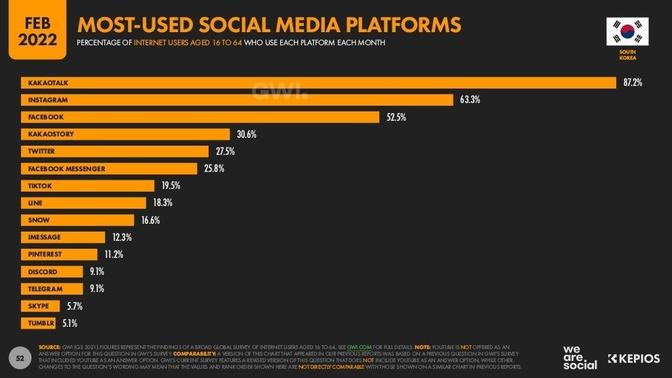
What do we see here? A huge audience that is heavily engaged with social media and mobile internet. And add to this the rich array of K-content such as dramas, movies and TV series produced and distributed by broadcasters and streaming services. Noone can deny that the country is a fertile spot to play with various types of content in a way which will appeal to both South Korean and global audiences. These Companies targeting South Korea’s culture space should begin considering which social media platform(s) are best suited for their campaigns. They can make a competitor analysis with a specific focus on the brand and creator/influencer partnerships. The common sense may direct you to focus on the social media platforms which are more popular among users and creators; however, this also equals a high competition and a possible barrier to entry into the market. Therefore, you can gain an advantage by repurposing your existing content with subtitle translation and dubbing on less competitive platforms and can grow your presence there.
6. The Influencer Market
According to KOTRA, the Korea Trade-Investment Promotion Agency, the influencer market recorded an incremental growth of $10 million in 2020. This upward trend shows no sign of slowing down. Statista survey concludes that this segment is projected to show an annual growth rate (CAGR 2022-2027) of 13.44%, resulting in a projected market volume of US$581.60m by 2027.
The primary platforms influencers and creators use to express themselves are YouTube, Instagram and TikTok. The occupations range from beauty and modeling to lifestyle tips and music. Considering that South Korea relies heavily on the internet to catch up with trends and find inspirations in influencers and creators they trust the authenticity of, players of the culture industry are on the hunt for unleashing the opportunities offered by this thriving universe and align their marketing strategy accordingly.
An interesting finding comes from the Korean Herald: Being an influencer or content creator is now ahead of a K-pop star as an ideal occupation for children aged 4-16 in South Korea. The reason for such impact is fairly simple: trust and intimacy. People look for sincerity and turn away from their inspirational figures if they realize that their first goal is to promote and sell products. In other words, creators looking to build a community must understand the expectations of their demographic as well as get prepared to engage with their followers closely, even involve them in their content creation process.
7. What Is There in South Korea for Startups and Investors?

South Korean pop culture captivated the world with its unique approach to storytelling which offers a harmonious marriage between traditional narratives and modern content. In other words, it does not dismiss its traditional and homegrown roots but at the same time invents creative ways to be globally appealing. It is a lucrative area for young content producers, creators, distributors as well as globalization/localization companies that enable content creators, film, drama, podcast producers last but not least their distribution channels to reach global audiences with subtitles or via dubbing.
Organizations such as KOCCA and startup initiatives including CKL and K-Start-up Grand Challenge Program stand out as the key organizations which further strengthen the position the country holds within the investor and startups ecosystem.
- KOCCA
The Korea Creative Content Agency (KOCCA) is a government agency which aims to introduce Korean content to the world. Beside the global promotion of the Korean content industry, it develops new technologies for future projects and cooperates with Korean startups to expand Korean content to international realms.
KOCCA develops new markets in other countries ranging from Los Angeles, San Paulo, London, Abu Dhabi to Beijing, Shenzhen, Jakarta, and Tokyo. The bases it founds in these locations help with the marketing and localization of Korean content and products abroad.
- Two Remarkable Startup Initiatives: CKL and K-Start-up Grand Challenge Program
CKL helps entrepreneurs in Korea turn their ideas into startups. Its fields of operation covers mentoring, networking, funding, and marketing for content creation startups. The open spaces and facilities it establishes promote creative activities at different levels and guide startups with each stage of their growth. Some of these include: Startup Farm, Content Startup League and Startup Masters.
The goal of the K-Startup Grand Challenge Program is to attract promising foreign startups to South Korea and pave the way for them to enter both South Korean and international markets. Accelerators and startups as applicants form the main pillars of the program. Accelerators select 60 teams and invite them to stay in Korea. These teams participate in a 3.5 month accelerating program in Pangyo, located south to Seoul. On demo day 20 top ranked startups are selected and they are provided with the opportunity to establish their businesses in South Korea, with additional financial support from the government.
As one of the startups which was accepted into the program and is currently facilitating in South Korea with its office located in Pangyo Techno Valley, Ollang is a first-hand witness of this vibrant environment and strives to make most of the opportunities offered to itself.
Global Reach: The Time for the Creation of Multilingual Content Arrives
After home-based streaming services such as Viki began delivering Korean content online with English subtitles, K-dramas gained momentum in the West during the 2010s. These platforms also formed distribution relationships with Netflix and Hulu, which allowed them to reach even more audiences. Given that the demand for content from Korea is higher than ever before, affordable and faster localization solutions which sustain the high quality at the same time are much more important now. Some argue that dubbed programs impair the original content and steal the pleasure of watching actors and actresses with their unique voices and mimics. However, it should be noted that quality dubbing helps viewers understand the content they are watching better. A large amount of viewership which includes people with disabilities like dyslexia or those who are blind or have impaired vision depends on dubbing to reach foreign movies and films.
Ollang believes that localization solutions that leverage the power of quality AI technologies shaped by human’s creative mind will be a true game changer for more accurate and reliable subtitles and dubs at a scale and affordable prices. This serves as our north-star because no Asian creators should remain unheard, and they should be provided with accessible solutions to grow on a global scale. Content production and distribution companies such as TV and film broadcasters, podcast media, video streaming and e-learning platforms should be able to maximize their content by making it accessible in other languages.
Subtitles and dubbing both help "overcome the one-inch tall barrier” put by linguistic differences and introduce “so many more amazing films" to the global media landscape.