
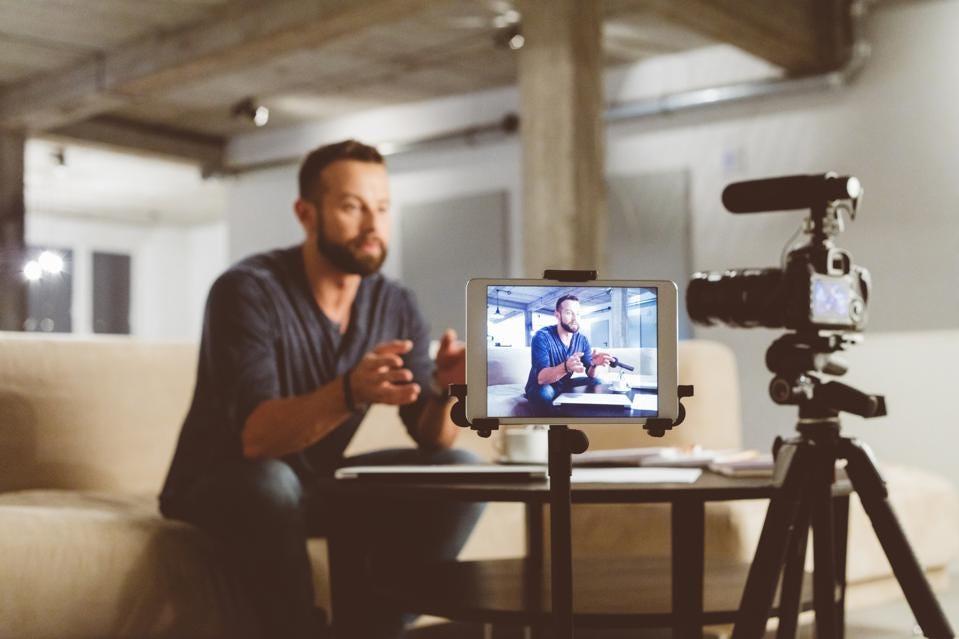
"A NEW CLASS OF CONTENT CREATORS HAS EMERGED THAT IS WRITING, RECORDING, FILMING, AND PRODUCING INCREDIBLY UNIQUE AND COMPELLING MEDIA AND THEN CONNECTING DIRECTLY TO AUDIENCES TO SHOWCASE AND SELL THEIR CREATIVE PRODUCTS."
These words belong to Eric Feng, former general partner at the venture capital firm Kleiner Perkins Caulfield & Byers. Feng invites us to see the emerging class of creators as digital entrepreneurs who engage in content creation as either full-time careers or side hustles, through different mediums, including social media platforms, independent websites, hosting services, or creator-to-fan platforms such as Patreon and Substack.
With nearly 300 million individual creators and a market size exceeding $100 billion, the creator economy has evolved into a thriving space for those who want to monetize their skills, talents, and knowledge online. The ecosystem is also fertile ground for advertisers, brands, and global companies as a branding and marketing strategy. For fans, creators and influencers are not unapproachable; in fact, the deeper the bonds established between a creator and their followers, the more likely it is that a product recommendation or endorsement coming with a message from the creator will sound authentic to the followers.
Roadblocks Facing Creators
Against such an exhilarating backdrop, one can easily miss the bottlenecks faced by the creators and influencers. The challenges in question restrict them in certain financial and social ways, thus impairing their creative endeavor. The majority of creators are left short of means to weather issues such as inconsistent and unfair earnings, random changes in social media platform algorithms, and last but not least, the pressure to constantly create new content.
The depth of the relationship between creators and their audience has upended the concept of "celebrities sitting in their ivory towers." However, this can have a damaging effect on creators’ mental health because they feel compelled to maintain constant back-and-forth dialogues with their followers.
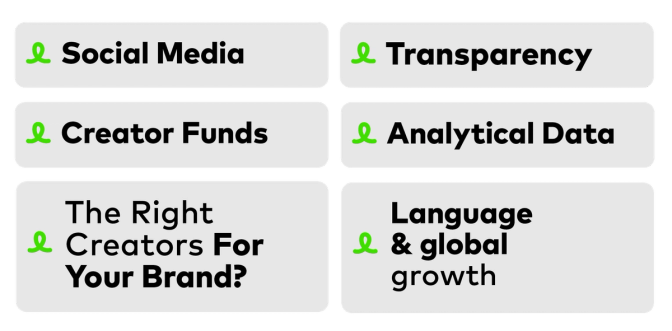
Key players in the industry should address issues plaguing the creator economy. With that in mind, we are particularly inviting social media platforms, brands, and talent management agencies, as well as creators and influencers, to partake in this discussion. We can help creators build healthier and more sustainable careers by dealing with the major obstacles below.
↠ Social Media Platforms and the Current Ad-driven Model
Creators and influencers mostly rely on social media giants such as YouTube, Instagram, Twitter, and TikTok to distribute and monetize their creations. The platforms constantly launch new tools and services for creators to simplify their workflows and increase engagement with fans. Then, why do 90 percent of creators report having experienced issues getting paid? Why do only 1.4% of Spotify artists make 90% of the income generated on the platform?
The platforms are built on advertising revenues. Whether it be ad revenues or brand sponsorships, only a small percentage of creators who amass millions of subscribers could earn enough to live off of their content. "Middle-class" and "micro-creators" face serious obstacles getting paid sufficiently to make it worth their while. As Richard Florida suggests in a Fast Company article, forming a larger middle class of creators is the key challenge that the creator economy is facing today. With sufficient support from governments and platforms, many more creators can earn substantial livelihoods, which is a privilege that a small percentage of the creator economy's top stars enjoy today.
↠ Why Are Creator Funds Not Working?
To benefit from the funds allocated by social media platforms, creators must achieve ‘partner’ status. This mostly requires creators to have amassed significant engagement and view numbers, explaining why up-and-coming creators are left short of the means to pursue content creation as full-time careers and earn a decent income from their work. Some social media platforms have acknowledged the unfairness in the way funds are allocated and the harm it causes. They're taking initiatives to remedy the problem. YouTube’s move to include Shorts creators in funding programs was a good example. "It finally gave me a platform where I can actually make money off just the content I'm posting," says Canadian travel creator Jaden Versluis whose TikTok videos have received hundreds of thousands of views but have not brought him any money as of the end of 2022.
The Shorts Fund was remodeled around Shorts ad revenue sharing by February this year to help creators monetize their Shorts views. Just a day after YouTube creators who are involved in the platform’s partnership program officially started earning revenues from their Shorts, YouTube announced that Shorts received more than 50 billion daily views, up from 30 billion the year prior. It seems Shorts will be a strong hand for YouTube to attract top creators and advertisers to the platform while strengthening audience loyalty.
Credit: Getty
↠ Brand sponsorships: A Mismatch Problem
For brands it is important to notice three main segments of creators: Mega-creators, mid-tier creators and micro-creators. Although mega-creators have a wider outreach, there is a tradeoff between the numerical superiority and the depth of fan-creator engagement. Middle-class and micro-creators prioritize building more lasting communities and specialize in a certain niche. If the mismatch problem is solved, that is to say, right brands are matched with right creators who will feel identified with the product, cause or service they promote, the brands can acquire a loyal customer base and gain more profits than those coming with short virality.
↠ Algorithm: Transparency and Random Changes
Creators have to play by the rules set by social media platforms, which are often not clear and subject to change without warning. This can have a negative impact on creativity because creators feel compelled to create what the rules like to watch." The dilemma facing creators is not easy to overcome: growing faster, getting noticed more easily, and earning higher amounts, or missing out on the virality and profits for the sake of a more loyal and long-lasting relationship. Creators do not deserve to be left in such an awkward situation. With better discovery tools, high-quality content from emerging creators could be unlocked worldwide. By leveraging data gathered from creators (with their consent) and advancements in AI technologies, tools for customization and discovery can be developed. The reluctance of the platforms to share the workings of the algorithm with creators may be causing them to miss out on an important advantage. After all, it is the creators themselves who spend hours every day testing functions to interact with fans and their fellow creators. Abbreviated data and any feedback from these people can be used to solve algorithm-related issues and provide platforms with reliable insights to work on.
↠ Analytical Data Is Not Everything But A Thing
Platform metrics such as reach, views, and engagement help creators understand what type of content their audience is more likely to engage with. Having a better understanding of what your audience wants to see is important; however, it should not prevent a creator from experimenting with new types of content. Analytical data works best when it becomes the voice of your audience, but not at the expense of staying true to yourself. As Mr. Beast said at the VidCon event: "Replace the word algorithm with the audience."
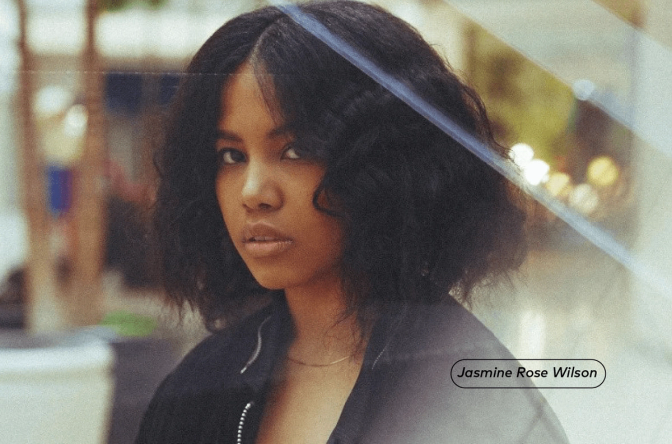
Besides, it is important to identify and track the few metrics that are most in tune with your creative enterprise. A good example of this is how KJ Jaundoo, manager of Jasmine Rose Wilson, known professionally as Baby Rose, used YouTube metrics to understand that it is mostly through this platform that the singer's fans discover her. Starting from this finding, they uploaded more videos to YouTube. While in one video Baby Rose spoke about herself, another showed scenes from her tour recap. Jaundoo says: "Remember why you’re in this and what the art means to you. You can still be you and meet the fans from a genuine place. That’s our mode. It’s not about the numbers but about creating culture and ensuring you’re integrated into the culture in a real way, and the numbers will follow. It’ll take a long time, but we’re invested in that process."
↠ Don’t Let Language Become a Roadblock
As the number of creators and the volume of content produced are constantly increasing, it becomes harder for a creator to get noticed when they connect with only a certain part of the world. We could equip creators, regardless of their subscriber growth and resources, with innovative and affordable subtitling and dubbing tools to globalize their stories for international audiences. By partnering with media localization companies that use AI-powered solutions with a perfect human touch, creators can reach out to global audiences.
Creators are well positioned to gain remarkable advantages from spreading their stories to global viewers. This is seen in the case of Marina Mogilko who trusted Ollang to dub her content from English to Spanish and Italian and created individual channels on both YouTube and TikTok. Here are some impressive growth metrics showcasing her reach and engagement on social media platforms. ☛ TikTok: 31.4K Followers and 931.2K Likes
☛ YouTube: 249K Followers and 100+ million views, with a 3,100% growth rate in total subscribers.
As a creator, you may be about to start your globalization journey. We are here by your side to accompany you throughout your global growth. A combination of cutting-edge technology and human expertise not only shortens the timeframes for localizing content but also lowers production costs and increases quality. The AI takes most of the burden off translators and voice artists' shoulders, thus allowing them to devote more time to refining and polishing the outcome.
The Creator Economy Has Yet To See Its Golden Age
Photo credit: Cole Mitchell
When endorsed with diverse revenue streams, creators will be well equipped to weather difficulties caused by inconsistent earnings. They will feel more empowered to stay true to what they represent, leading to an ecosystem where deeper bonds are established between creators and their communities. If creators and influencers succeed both on a local and global scale, so do the platforms or enterprises that they work with. As a creator, you may expand your outreach to the extent that the language you talk with your audience allows. There is a huge world out there - a global community desiring to find content in multiple languages. By localizing your stories into different languages, you will not only unlock global audiences, but also be able to establish deeper bonds with viewers by catering to their needs to experience content in their native language or preferred language.