
If your company specializes in subtitling and dubbing creator and influencer videos for different platforms, I cannot emphasize enough the importance of staying up to date with this booming industry.
The creator's universe is dynamic and ever-evolving. As a content writer, I’m always on the lookout for expert opinion and advice that will strengthen my articles on the ecosystem. They also enable me to realize the gaps I need to address.
Recently, I had an opportunity to ask questions to Irina Malai, a professional Youtube Manager supporting content creators to build sustainable careers in the creator economy.
"Creators pour their hearts and souls into their craft, but they have a lot on their plate: shooting videos, managing social media channels, tracking metrics, engaging with fans, and starting localization projects to appeal to international audiences."
Sounds daunting, doesn’t it? Irina, a YouTube Manager who learned the delicacies of the craft from Marina Mogilko, provides professional support for creators.
Human-In-the-Loop For Better Results With AI Dubbing
In the interview you’ll read now, the questions I asked Irina mostly revolve around the potential of localizing creator content via dubbing. When I wanted to learn her opinion about benefiting from AI for video dubbing, she accepted the advancements that technology has made but could not help expressing doubts:
"AI dubbing technology has come a long way and shown promise. The emotional nuances and subtleties of human speech may be difficult to replicate with AI-generated voices, especially in certain genres like dramas and comedies."
When your goal is to connect with global audiences, you should talk to them in their own language as naturally as possible. Tonality, the native-feel of the dubbing, and the accurate translation of your message cannot be compromised. And this is exactly where the cooperation between humans and AI is essential to creating captivating and engaging videos in multiple languages.
Supporting Creators In Building Sustainable Careers
What’s the first thing that pops into your mind when you think of a YouTube Manager? What kinds of roles do they take on to help content creators grow their audience on YouTube? I got my answers to these questions while I and Irina were mentioning bottlenecks that creators are facing today.
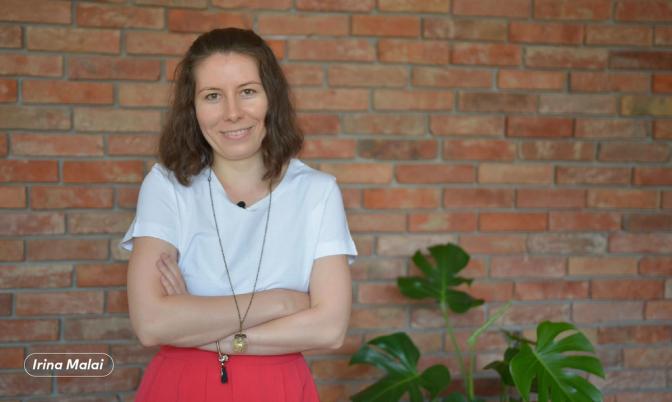
"As a YouTube manager or any other social media platform manager, my role is to advocate for creators and their interests within the company. It's important to listen to their feedback and concerns and work with internal teams to develop solutions that are fair and effective for all creators, regardless of their size or status."
Rather than establish a typical "client and service provider" relationship with the creators she is working with, Irina accepts it as her responsibility "to identify effective strategies that will advocate creators’ interests within the platform as well as to support them through educational resources, networking opportunities, and other initiatives for achieving success."
In order to cast a light upon the challenges that creators are facing, she engages with them directly. Here are her top mediums that she uses to hear the voices of creators:
- Surveys
- Focus groups
- Various digital communication channels that are easily accessible.
Working collaboratively with industry associations and other stakeholders is also essential to developing industry-wide standards and best practices. For Irina, the ultimate goal of this cooperation is to offer fair revenue-sharing models, more transparent reporting, and improved accessibility of new features launched by YouTube.
Creating Multilingual Content to Win Your Followers’ Heart
I previously interviewed Inna Ushakova, a fellow YouTube Manager, and asked her about how they decided to launch Spanish- and Italian-dubbed channels for Marina Mogilko’s videos. She told me, "We hadn't considered posting Marina's content in other languages until we received an email from Ebru Yıldırım, the CEO of Ollang." Now, she definitely recommends that creators dub their stories into other languages because "by producing content in their language, you can reach millions of people who wouldn't."
The number of people who become creators and influencers is increasing. We see more of them accepting content creation as a full-time job and turning into great storytellers. However, most creators have yet to recognize the benefit of creating multilingual content so that they can get closer to the world and offer more relatable stories in local languages. Irina is on the same page with us:
"Localizing creators' content via subtitling and dubbing can indeed be an effective way to reach wider audiences and show that you care about their needs and cultural differences. By making your content accessible to non-native speakers, you can increase your audience base and build a stronger relationship with your fans."
Irina finds it important to analyze the genre and characteristics of the content to effectively adapt it for different languages. If the content is heavily reliant on cultural references, she thinks, it may be more challenging to create content in a different language that audiences will identify with. This is where cooperating with a reliable media localization company makes the difference.
Three Essentials of Video Dubbing for Content Creators
Irina’s advice on dealing with the process has three essentials:
↠ Choose the right dubbing studio: It's essential to work with a reputable dubbing studio that has experience in your target language and can ensure high-quality dubbing.
↠ Optimize the script: The script should be suitable for dubbing to easily adapt to the target language. You may need to make some changes to the script to ensure it flows well in the target language and to avoid potential cultural misunderstandings.
↠ Plan the dubbing process: Plan out the entire dubbing process in advance to avoid potential delays and additional costs. Consider factors such as the number of voice actors required, recording and editing schedules, and post-production requirements.

She wanted to add another point that would complement her strategy: deciding which language or languages to start with or expand into. She recommends conducting market research to identify the languages most commonly spoken by the target audience in question. "By understanding the needs of their audience, [creators] can prioritize the languages to dub their videos, and it will give them an idea of the potential market size for their content."
When YouTube released the multilingual audio track feature for creators, the platform asked Mr. Beast, one of the creators who had the chance of experiencing the tool before its wider launch, to explain how he used analytics to understand from which country he had more views. Irina also advises creators to, "analyze their website or social media analytics to identify the countries and regions where their content is most popular and then start with dubbing in the languages spoken in those regions."
YouTube’s Multilingual Audio Track, Aloud: What Does It Mean to Content Creators?
Speaking of YouTube’s multilingual audio track tool, I could not miss the opportunity to learn her opinion on Aloud, the in-house built AI-based dubbing technology that YouTube offers to a select group of creators. With Aloud, the company announced, it’s now possible for creators to add multilingual voice tracks to new and existing content. As far as we can tell from this announcement, creators still need to partner with third-party localization companies to dub their content. Obviously, at the moment, Aloud cannot meet the capacity and quality requirements to create multilingual versions of the videos. Will the initiative strengthen the hands of creators to start their journey on a global scale and branch out to new international countries over time? We will see.
"The use of AI-based dubbing technology can make the process more accessible and cost-effective for creators. However, it's important to consider the potential limitations of AI-based dubbing technology and weigh the benefits and drawbacks before making a decision."
Irina seems to recognize the fact that, as is the case with every technology, AI dubbing has its own limitations, too. In fact, any localization attempt that does not involve humans' creativity and meticulous editing skills is most likely to fall short in certain aspects and fail to meet expectations.
Solutions Powered By AI: It Can Be An Ally For Translators and Voice Artists
"The emotional nuances and subtleties of human speech may be difficult to replicate with AI-generated voices, especially in certain genres like dramas and comedies."
She couldn’t have put it better. And our answer to this as the Ollang team? AI technology has made great strides in the last few years. It simplifies subtitling and dubbing processes for many genres and audiovisual content. However, HITL, human in the loop as we call it, is essential and a non-negotiable way to ensure that technology works for and with humans. Solutions powered by AI will reduce the burden on translators and voice artists, meaning that they will invest more of their time and mental energy into polishing the AI-generated audio tracks.
“I think over a couple of generations, humanity has proven that it can adapt wonderfully to major technological shifts." So told OpenAI CEO Sam Altman to ABC news. He’s inviting people to accept AI as more of a tool than a replacement. "Human creativity is limitless, and we find new jobs. We find new things to do."
At the end of the day, as media professionals, we strive to create a more liberating, and fairer ecosystem for content creators by lowering the barriers to reaching wider audiences all around the world. Over time, AI will establish itself as a dependable aid. It will earn its spurs for the creation, distribution, and localization of every type of content, and we will discover novel ways to strengthen the cooperation between AI and humans.