
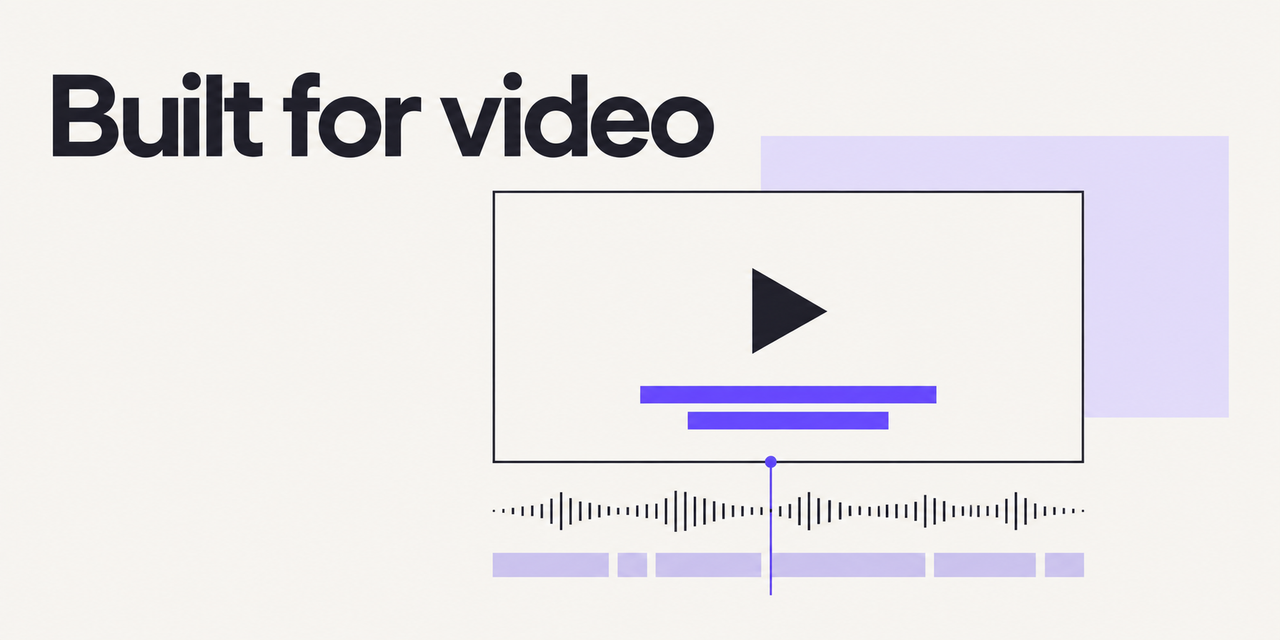
Only 1% of "useful content generated every day" gets translated, according to CSA Insights' analysis. For video content, that percentage is likely even smaller given the additional complexities of subtitling and dubbing workflows, such as visual cues, timing, cultural nuances and formatting. (CSA's article.)
To overcome video translation challenges, most teams reach for Neural Machine Translations (NMTs) or single-model LLMs because they're familiar and available. These systems work well for static text but break down when they encounter video translation. They can't judge whether a subtitle fits on screen, handle speaker overlap, or adapt cultural references that work in one language but miss the mark in another.
Solving video localization’s core challenges
This gap between what video needs and what standard AI delivers creates a problem for content owners and streaming platforms. They want quality and speed, but conventional tools force them to choose one or the other.
Newer approaches, like multiagent AI used by Ollang, tackle audiovisual content differently. Instead of treating video translation as a text problem with video constraints, they handle audio, text, and video simultaneously throughout the process. Each specialized agent applies domain expertise at its step.
What should businesses consider when translating with AI?
Content type shapes everything. Technical manuals need precision but can sacrifice some fluency. Marketing videos need brand voice and cultural adaptation. Educational content requires clarity above all.
Audiovisual materials add constraints that don't exist elsewhere: tight character limits for subtitles, speaker overlap that confuses single-model systems, and regional compliance requirements for captions and SDH (Subtitles for the Deaf and Hard of Hearing). Miss any of these, and the content fails its purpose.
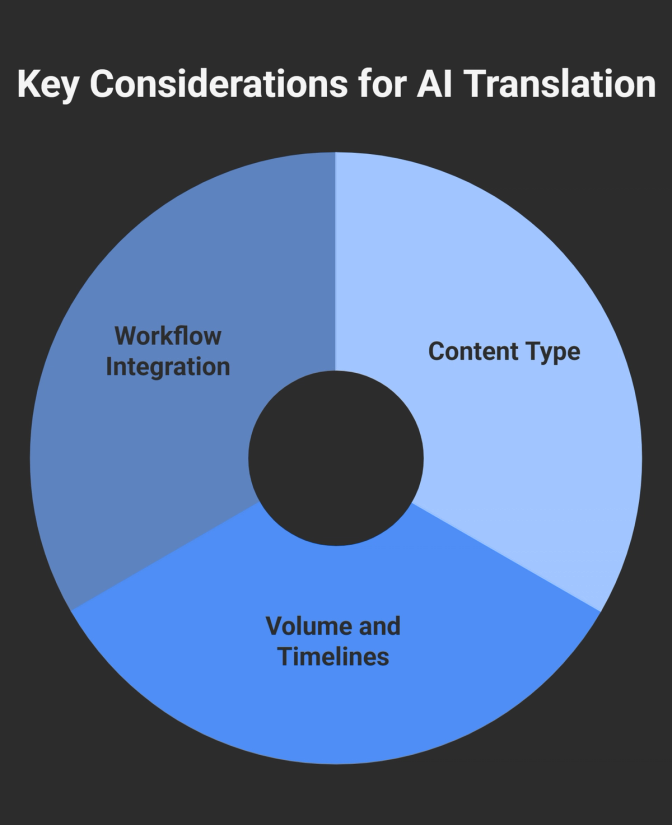
Volume and timelines matter critically. Large projects with fast delivery cycles need scalable systems. For rare language pairs, fluency can drop unless the system supports low-resource languages.
Your workflow is also key. Does the AI solution integrate with your current tools? Can your team handle post-edits and quality checks within existing bandwidth? These factors determine whether you need automation-first AI, hybrid approach, or dedicated post-editing services.
A comparison of key AI translation technologies
⚫ Neural Machine Translation (NMT): Best for fast, high-volume output of general content. It’s cost-efficient but lacks flexibility, often needing heavy editing for nuance or tone.
⚫ Large Language Models (LLMs): Offer fluent, context-aware translations for creative content. However, general-purpose LLMs struggle with domain precision and don't natively manage audio or timing constraints without specialized integration.
⚫ Multiagent AI: Designed for complex content like video where tone, timing, and cultural fit matter. Ollang's approach combines multilingual, multimodal, and multiagent capabilities (M3) to address video translation challenges.
The system draws from domain knowledge, supports multiple input types, and applies self-correction through specialized agents. One agent handles subtitle timing and length. Another manages cultural adaptation for humor and references. A third ensures audio sync for dubbing projects. This approach delivers more accurate and consistent results than NMT or LLMs alone.
Scalability and cost considerations
NMT appears low-cost per word for large volumes but requires extensive human post-editing, which limits scalability. LLMs come with higher processing costs and often need additional fine-tuning for specific domains.
Initial integration and computational power for multiagent AI may cost more upfront, but the long-term benefits include greater automation and efficiency.
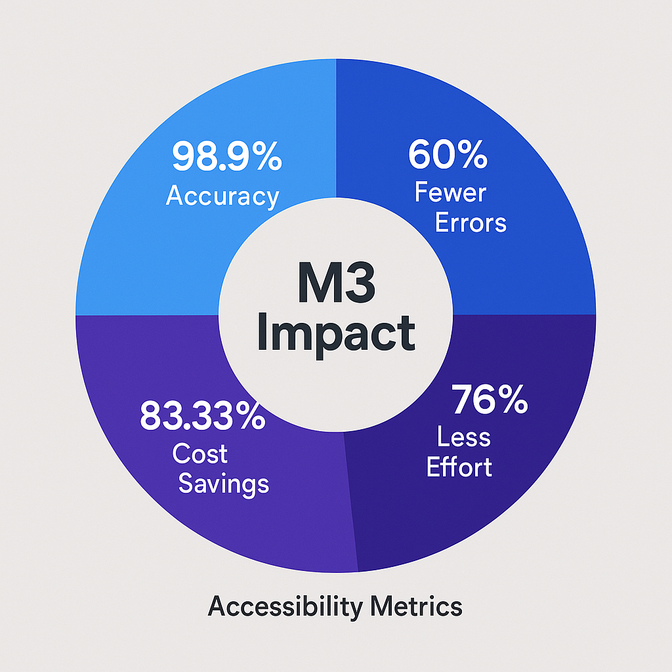
With multiagent translation, we reduce manual editing by over 75% by automating tasks for audiovisual content. This leads to significant cost savings. Partners using our platform saw up to 83% cost reduction for short series compared to traditional AI with editing.
Why choose Multiagent AI for video translation
The right AI solution depends on your goals, resources, and content type. For video content, multiagent AI handles different formats, automates complex tasks, and delivers compliance-ready captions and subtitles.
To see how this works in practice check our case study showing how one platform localized over 20,000 minutes with multiagent AI. You can also read our blog post comparing standard AI, Gen AI, and multiagent systems in translation quality.
For pricing or a tailored walkthrough, contact our team.