
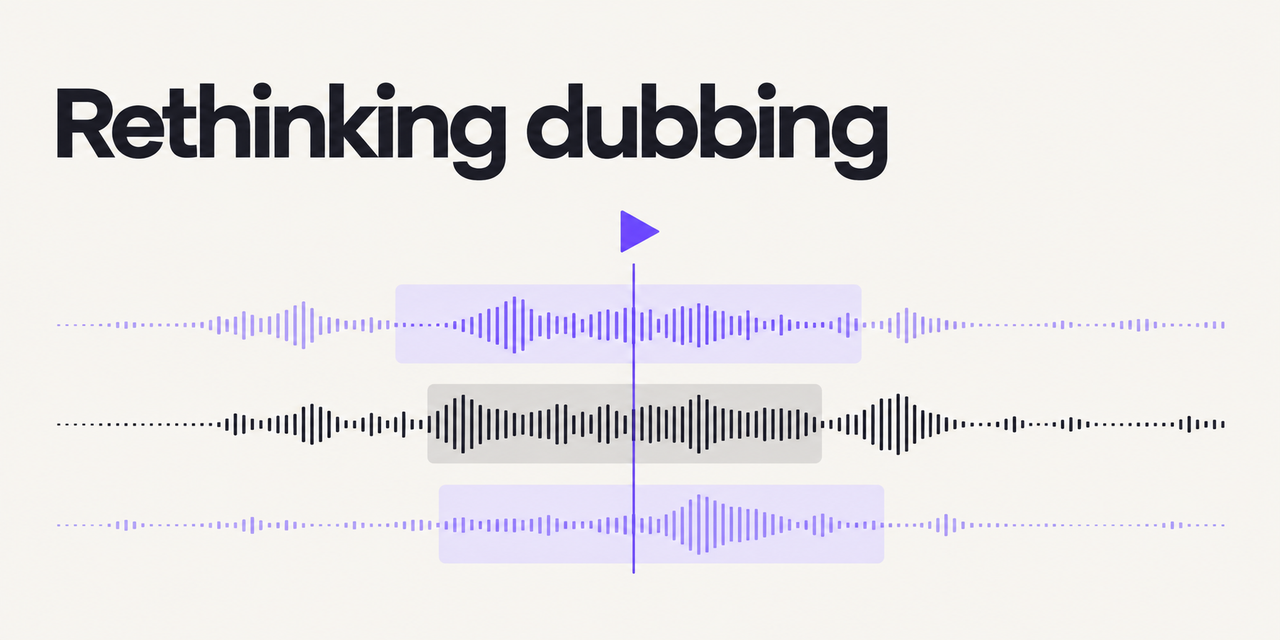
Traditional dubbing creates a challenging equation for content owners: complex logistics, extended timelines, and significant costs per finished hour. Language pairs, quality requirements, and studio selection all influence final costs. These factors create significant barriers for businesses that target international markets.
Having analyzed numerous AI dubbing and studio dubbing project workflows, we identified specific cost centers where automation reduces or eliminates expenses. This post explains these critical cost factors and shows how multiagent AI addresses each one.
7 factors that drives dubbing budgets up
Studio rental fees. Costs vary from $50 to $180 per minute of content due to expenses like studio rental, voice talent, and engineering. (While AI dubbing costs as little as $1 to $10 per minute.)
Voice actor salaries. Professional voice talent represents a major expense, particularly when projects require specific accents, emotional range, or celebrity-level performers across several languages.
Script translation and adaptation. Manual translation requires multiple specialists like translators, cultural consultants, and script adapters who match dialogue to lip-sync timing.
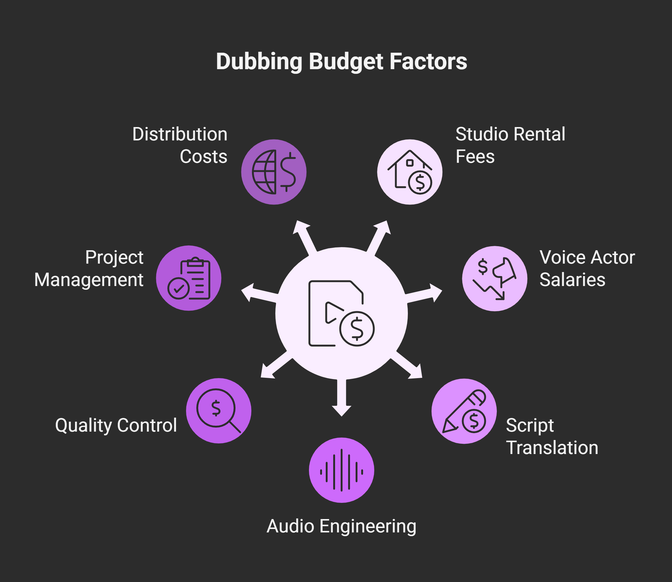
Audio engineering. Professional audio engineers and specialized software licenses add substantial costs to post-production workflows.
Quality control and revisions. Traditional workflows often require multiple review rounds with directors, translators, and client stakeholders.
Project management overhead. Traditional dubbing requires dedicated project managers to handle scheduling, communication, and deliverable tracking.
Distribution and formatting costs. Preparing dubbed content for different platforms requires additional technical expertise.
These cost centers are inherent to human-heavy manual processes. Researchers ran a test on voice-over workflows for an 11-minute video. The old way took 24 hours of human labor for each language. When they added AI help, the time dropped to 12 hours per language. While faster, this approach can compromise quality and create new challenges. The right AI technology addresses these problems.
Ollang's multiagent AI reduces dubbing costs
Multiagent systems use specialized AI agents that focus on specific tasks. They outperform standard AI tools because each agent masters one function exceptionally well.
Here's how some key agents in Ollang's system work to reduce dubbing costs while maintaining quality:
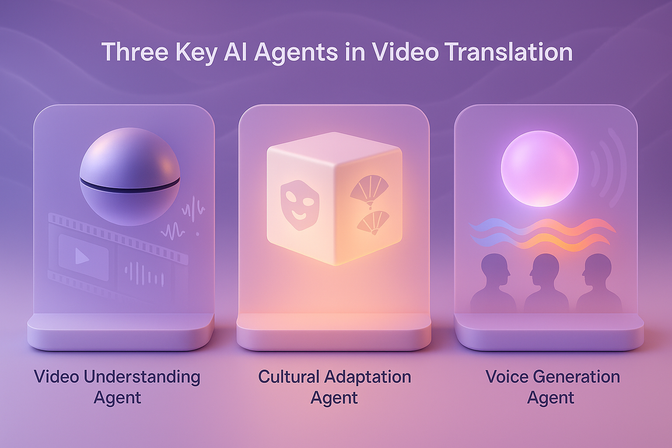
Video Understanding Agent eliminates manual transcription costs by analyzing audio and visuals simultaneously to extract accurate transcripts. This captures non-verbal cues like tone shifts and background sounds that standard AI often misses.
Cultural Adaptation Agent decreases the need for human cultural consultants by automatically adjusting translations to match local idioms, humor, and cultural references. This prevents the costly back-and-forth revisions that result from awkward literal translations.
Voice Generation Agent produces natural AI voices that reflect each character's tonality and emotion. This eliminates studio rental fees, actor payments, and multiple sessions.
Content owners and businesses save significant money compared to traditional studio dubbing. Automatic quality control systems catch errors before they become problems. This cuts down on costly revisions and late deliveries.
What our partners achieved with AI Dubbing
An OTT provider needed to dub a 90-minute feature film in Italian. Traditional studio workflows typically require 4-6 weeks for projects of this scope, including sessions, editing, and revisions. Ollang completed the entire process with AI dubbing, including client revisions, in 10 days. Human involvement was significantly reduced as compared to traditional studio dubbing.
A digital platform streaming animated films needed audio descriptions for English videos. Traditional studio workflows involve scriptwriters, voice actors, sessions, and post-production editing. Our automated audio description agents, with minimal human revision where necessary, delivered same-day results with dramatic cost savings compared to traditional methods.
When the script is wrong, the dub falls apart
High-quality dubbing starts with precise scripts. Inaccurate transcriptions lead to mistranslated content, which produces voice performances that don't match the original intent.
We chose AssemblyAI’s Universal Speech-to-Text API to improve transcription across our platform. Accuracy improved by 30–40%, especially on non-English audio and speaker separation. This makes dubbing output clean and well-timed, with minimal errors that disrupt viewer experience. Content owners get ready-to-publish audio faster, with less revision and lower post-production costs.
Translation accuracy matters just as much as transcription precision. Our localization accuracy for German subtitles reaches 90.5% on a TV show, compared to GPT-4.5's 76.4%. These metrics reflect real-world content processing, where our system accounts for conversational context and cultural references that general-purpose language models often miss.
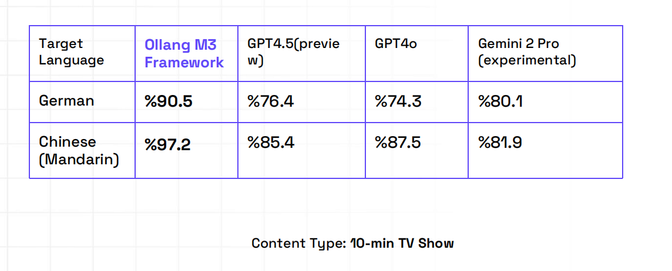
We've developed our multiagent AI by prioritizing accuracy and accessibility as the foundation for successful dubbing. Without accurate scripts, even perfect voice synthesis produces dubbed content that feels disconnected from the original performance.
What AI voices can (and can’t) do for your projects
AI-generated voices scale across languages and eliminate the scheduling and coordination complexity of human voice actors.
These voices have yet to reflect the wide range of emotional tones of human voices. Still, they sound humanlike and work well enough in many use cases like short series, documentaries and marketing clips.
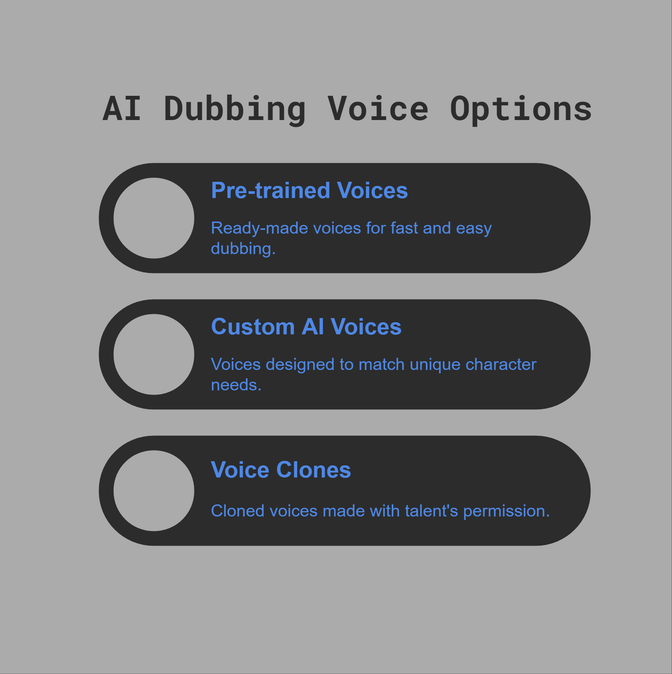
Our partners choose from three voice options: pre-trained voices for quick deployment, custom AI voices tailored to specific character requirements, or voice clones created with explicit talent consent.
A digital video distribution platform used this approach to dub documentary films into more than 10 languages. Our platform reduced voice acting costs by approximately 80% (calculated from English to Japanese dubbing rates) while cutting production time by roughly 70-80% through rapid AI generation and minimal revision cycles.
How to start an AI dubbing project with OLabs
OLabs, our localization platform, simplifies the dubbing process into five steps:
➊ Sign in to your OLabs account.
➋ Select AI dubbing from available order types.
➌ Upload your video via URL (YouTube, Vimeo, WeTransfer) or choose from existing projects.
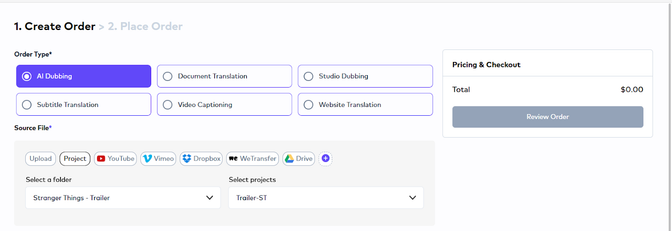
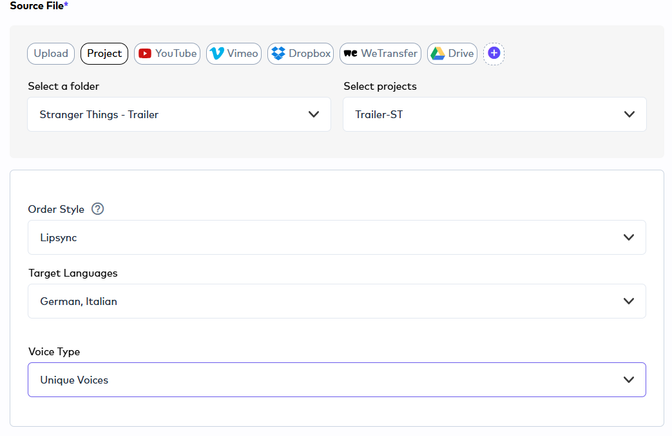
➍ Select preferred voice type and dubbing style (lipsynch or voiceover).
➎ If you already have subtitles, upload your source and/or target SRT files to bypass the closed captioning and subtitling stages. OLabs will process them directly for dubbing.
➏ Review and confirm your order.
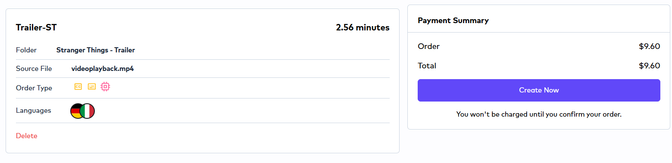
Ollang's multiagent system completes the entire process from captioning to voice generation within the same day, excluding human editing. Our partners can choose between two quality control options: professional AI dubbing editors refine the output, or use OLabs' editing interface to make adjustments yourself.
AI dubbing vs studio dubbing: what's the better fit for you?
AI dubbing works best when you prioritize speed, scalability, and cost control. It delivers strong results for TV series, e-learning modules, gaming content, and documentary projects that need rapid expansion into multiple languages with consistent quality. Budget-conscious teams, including SaaS companies and mid-sized media firms, see maximum ROI from this approach.
Studio dubbing remains the better choice for projects requiring nuanced human performances. Prestige films, emotionally complex narratives, and content where vocal performance carries significant artistic weight benefit from human actors' interpretive skills.
The right choice depends on the content type, desired impact and resources available. Ollang provides both multiagent AI dubbing and studio dubbing to meet varying needs and save content owners from managing various vendors and complexities.
*****************
Start reducing your dubbing costs
Contact our partnership team for enterprise solutions tailored to your specific needs.
*****************
FAQ: AI dubbing questions answered
What is multiagent AI dubbing?
Specialized AI agents automate different parts of the dubbing process like transcription, translation, and voice generation, with each agent optimized for its specific task to improve efficiency and reduce costs.
How much does AI dubbing cost compared to traditional methods?
Cost savings vary based on language pairs and project scope. Our clients typically see 80-90% cost reductions with significantly faster turnaround times.
Can AI dubbing match studio quality?
For most content types, AI delivers comparable quality faster and cheaper. Studio dubbing performs better for projects requiring deep emotional resonance or artistic vocal interpretation.
What types of content work best with AI dubbing?
Educational content, gaming, TV series, documentaries, and corporate videos achieve excellent results with AI dubbing. Marketing videos and training materials also work well with this approach.