

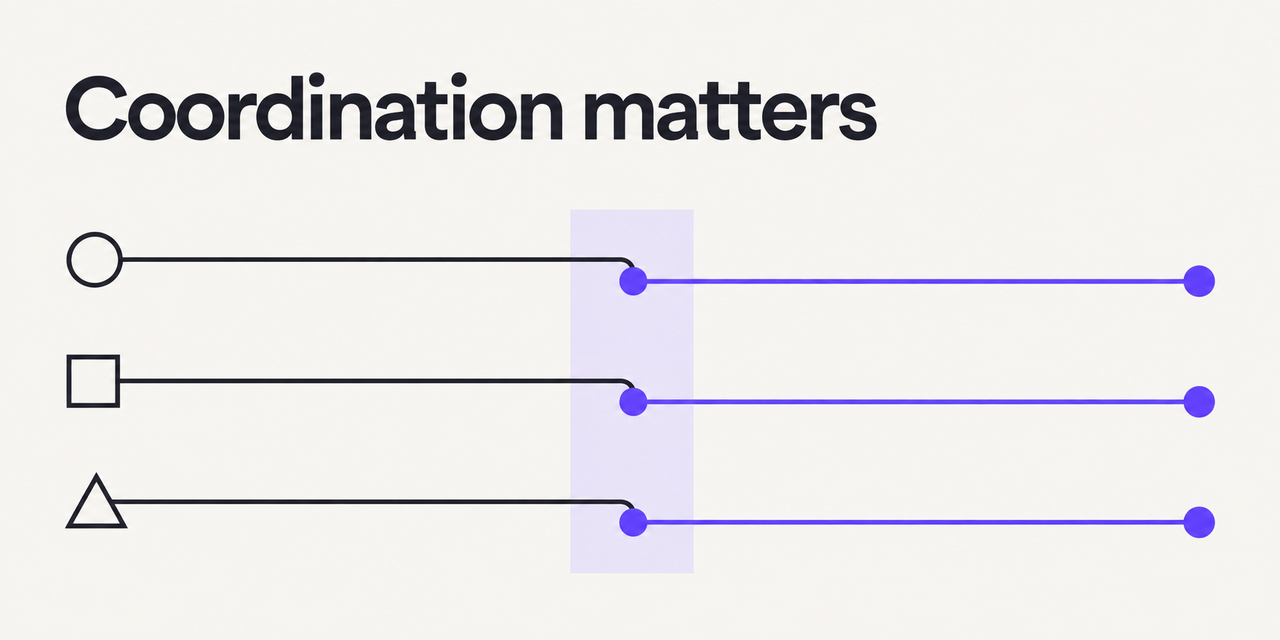
Multiagent AI translation struggles without clear agent workflows, but outperforms single models in accuracy and consistency when coordination works effectively.
Developers and practitioners raise valid concerns about system complexity, resource consumption, and coordination failures between specialized agents. Vendors and buyers encounter similar problems when multiple agents work against each other instead of together.
We'll first examine the strongest arguments against multi-agent AI, then show where and why it actually works, particularly for video translation. Throughout this post, we reference both Ollang's evaluations and independent research on multiagent AI.
What makes multiagent AI coordination so difficult?
Critics in the AI community argue that multiagent systems create significant failure points. Agent handoffs can break down, which causes incomplete execution or endless loops where agents overwrite each other's work. Experts also claim multiple specialized models consume more computational resources than one large model.
Our approach: Ollang addresses these coordination concerns through structured handoffs. Each agent receives specific inputs and delivers defined outputs. Our system activates only the agents required for each video type, often with fewer resource requirements than massive single models that attempt to handle every localization challenge at once. The problem with inconsistent translation ratings
Translation experts point to another fundamental challenge: proving multiagent value through reliable quality metrics. Different evaluators disagree on what constitutes good translation quality.
Researchers at Southern Methodist University recently discovered Claude rating Google Translate higher than their multiagent translation team (MATT) in some cases, while OpenAI and Gemma consistently preferred MATT's outputs. This inconsistency makes performance claims difficult to trust across the AI research community.
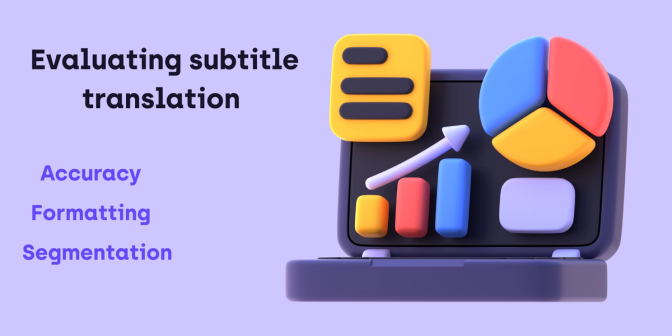
Our approach: We track accuracy, subtitle segmentation quality, and formatting compliance simultaneously, which limits subjectivity by grounding the assessment in measurable, task-specific criteria.
When does multiagent AI translation actually work?
Our internal evaluation of a streaming platform’s series shows Ollang's multiagent system achieving 60% error reduction compared to single-model approaches.
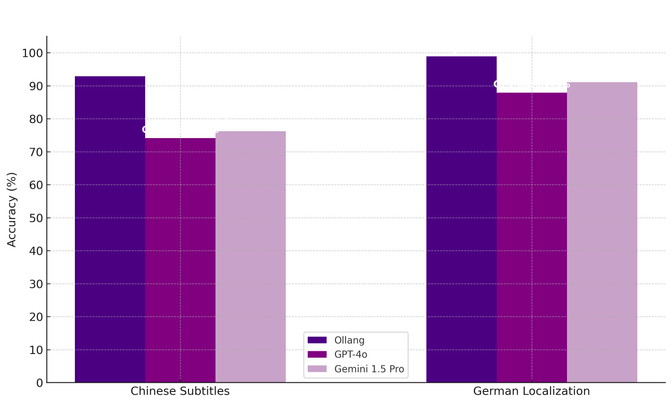
Chinese subtitle accuracy reached 92.9% versus GPT-4o's 74.1% and Gemini 1.5 Pro's 76.2%.
German localization resulted in 98.9% accuracy compared to GPT-4o's 87.9% and Gemini 1.5 Pro's 91.1%. (Check out our whitepaper for details.)
Instead of editors spending days fixing mistranslated cultural references and timing issues, our partners complete final reviews in a fraction of the time. Reduced manual corrections create measurable competitive advantages for global content distribution.
Voice localization follows the same efficiency pattern. Traditional dubbing workflows require weeks of coordination between translators, voice actors, and audio engineers. Ollang's voice agents handle AI dubbing within the same localization platform.
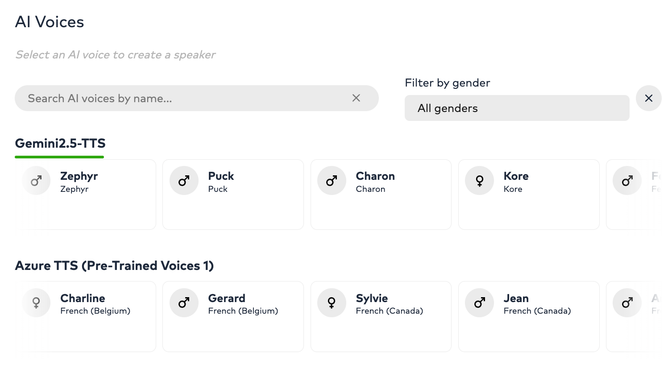
From there, a range of voice options is available including pretrained voices like Gemini's customizable set, Ollang’s unique AI voices, and cloned voices when permitted.
Our multiagent AI creates accurate dubbing scripts, and voice synthesis is completed automatically. All these processes happen often within a couple of hours, excluding manual editing.
Teams can edit voices themselves or request our professional editing. This end-to-end approach eliminates the usual transfers between multiple vendors and tools.
(Read our case study to see how a global documentary film distributor has used Ollang's AI dubbing for over two years, processing more than 600 hours of documentaries into more than 10 languages.)
Which AI agents are used for video translation tasks?
Content needs and genre determine the solution. Ollang activates specific agents based on what your content requires. Some agents handle every project, others jump in when needed.
Missing visual cues: When a character points at something on screen while they make a joke, traditional AI misses the visual reference. Video Understanding Agents analyze scenes while converting speech to text, with memory continuity across video segments to prevent context gaps.
Cultural references: Cultural Adaptation Agents “understand” how humor and idioms work differently across cultures and translate to equivalent expressions rather than word-for-word conversions.
Inconsistent characters: Sentiment Alignment Agents maintain emotional tone consistency throughout content and keep character personalities coherent across multiple episodes.
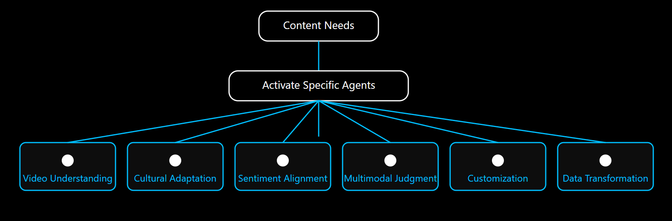
Quality problems: Multimodal Judge Agents provide quality assurance across visual, audio, and text elements to catch errors that single-model evaluation consistently misses.
Different content needs: Customization Agents adjust workflows based on specific requirements and adapt the system to various content types and client needs.
Formatting issues: Single models often produce text that exceeds screen space or breaks subtitle layout. Data Transformation Agents fix these issues by converting formats and organizing the content correctly, so everything displays as it should.
Multiagent AI for video accessibility requirements
Most AI tools skip sound descriptions, which makes the content inaccessible to deaf and hard-of-hearing viewers and fails to meet accessibility standards.
Character identification becomes another problem. When three people speak, these tools rarely indicate who says what. Visual cues like [whispers] or [phone ringing] get ignored because text-only models cannot connect audio patterns to descriptions.
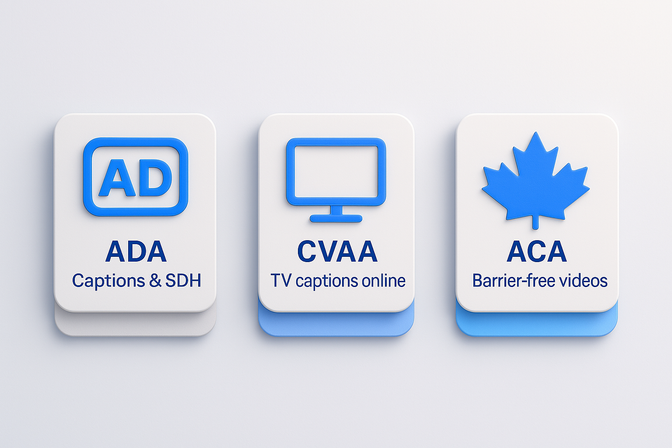
We tackle each accessibility challenge through task-based AI agents. The system identifies and describes non-speech sounds like door slams and phone rings. Speaker tracking follows scenes, even when voices overlap. Formatting meets legal standards like EAA, ADA, and ACA across platforms, with over 95% accuracy in closed captions (CC) and subtitles for deaf and hard of hearing (SDH) delivery.
Nobody misses context or struggles with poor formatting or inaccurate captions - they receive complete accessibility support that matches professional broadcast standards.
Should your company use multiagent AI for translation?
Organizations thinking about using multiagent AI for video localization need to look at certain key factors to make sure it works well.
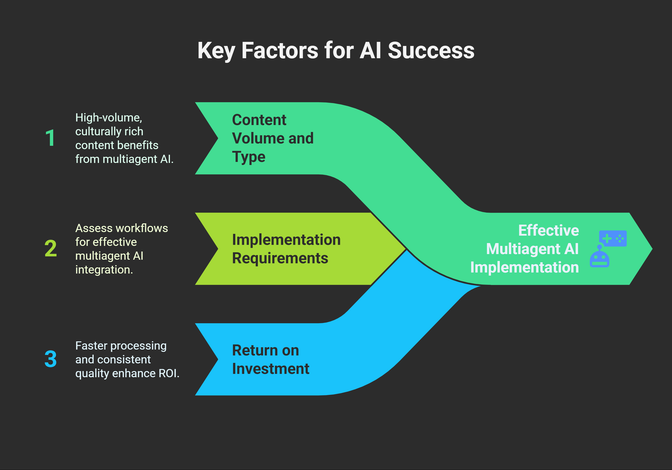
Content volume and type
Multiagent AI is ideal for content that combines video, audio, and text, where multiple quality checks improve final output. Shows, courses, and marketing campaigns with many episodes benefit the most because they need consistent quality throughout. Content with cultural references or with humor especially gains from the added coordination that multiagent systems offer.
If your brand’s reputation depends on getting cultural details right, the extra complexity of multiagent AI is worth it. Poor localization can harm your brand, so having multiple layers of checks that these systems provide helps avoid mistakes.
Implementation requirements
Organizations should review their existing workflows and teams to integrate multiagent AI effectively.
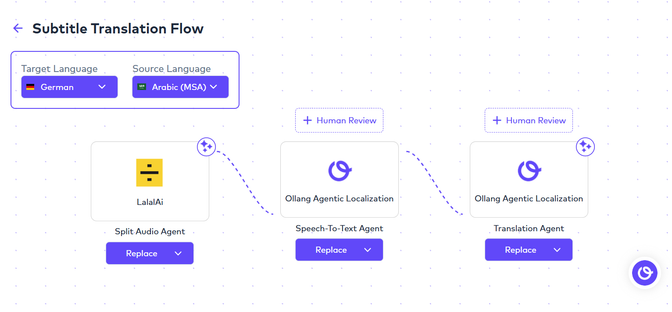
However, they do not need to develop complex systems or acquire deep technical skills. Ollang handles the entire multiagent AI workflow, from coordination to quality control, within one integrated system. This approach reduces operational challenges and accelerates implementation, so teams can focus on content rather than technical setup.
Return on investment calculation
Faster processing lets you get your content to market quicker. Consistent and high quality output creates a reliable look and feel across your entire content library.
Costs become worthwhile once you reach a volume where setup expenses are small compared to the savings in quality improvements and faster delivery.
Our partners at Ollang have cut costs by over 80% using multiagent AI for translating closed captions and subtitles in multiple languages. With less editing required, companies can expand into new markets without costs increasing in the same proportion.
Multiagent translation for global success
Multiagent AI solves specific problems that single AI models ignore. Character consistency across episodes. Proper subtitle formatting. Cultural adaptation that makes sense. Accessibility achieved through CC and SDH across regions.
Your global audience gets content that feels native to their culture. Your team avoids the endless revision cycles that drain budgets and delay launches. Your brand maintains quality standards that build trust across international markets.
The technology exists. The results are measurable. The competitive advantage is real.
Contact our partnerships team to see how multiagent AI can translate your content across languages while delivering full accessibility for your global audience.