

No need to fret, because it is far from being a possibility—at least at the current stage of advancements in AI technologies. However, AI does open up exciting opportunities and can lend a helping hand to translators and linguistic experts in their day-to-day work. How can this be possible? Let's first debunk some widespread myths that have emerged around discussions about localization and AI-enabled technologies and explore the opportunities to utilize technology in your best interest and professional development.
Beyond the Hype: Separating Fact from Fiction
Myth 1: AI is capable of completely replacing human translators.
How to Reframe: While AI has made significant strides in localization, it cannot fully replace human expertise. It is rather a naive belief to claim that AI can completely surpass humans in their ability to provide nuanced understanding, cultural sensitivity, and creative adaptation to language! AI works best when used in collaboration with human translators, augmenting their efficiency rather than serving as a complete substitute.
Do you want to be a winner in this new AI future? Then, unlock the potential of AI technology and seamlessly integrate it into your work. You will be able to simplify and accelerate your work, freeing ample time to focus on tasks that require human skills, such as creative adaptation and quality assurance. As a result, the AI-generated drafts you edit and refine will excel, enabling you to establish trust as accomplished translators.
Upshot: With its lightning-fast processing to tackle the tedious and mind-numbing tasks, AI assists in handling the repetitive work while human translators bring their invaluable knowledge and creativity to the table. More time and mental energy to sprinkle your linguistic magic!
Myth 2: AI always produces flawless and accurate translations.
How to Reframe: Let's face it, folks! AI has come a long way, impressing us with its accuracy and speed. But perfection? Certainly not the case, as it is not infallible. Language is complex, and there are context-dependent nuances, idioms, and cultural references that can pose challenges for machines to comprehend. It is vital, particularly in the localization of audiovisual content such as movies and TV shows, to capture the emotional undertones and humor. This is the only way to connect with the audience on a profound level.

Human translators possess the ability to navigate these complexities and ensure accurate translations that resonate with the target audience. They add the subtle twists, witty wordplay, and cultural references that bring a piece to life.
Upshot: By benefiting from AI's capacity to streamline the process and provide a foundation for efficiency, human translators can delve deep into the intricacies of language and immerse themselves in cultural nuances.
Myth 3: AI has the potential to reach and even surpass human creativity.
How to Reframe: Creativity is often considered unique to humans because it involves complex cognitive processes, abstract thinking, and the ability to generate novel and imaginative ideas. AI, on the other hand, lacks the subjective experiences, emotions, and consciousness that are inherent to human creativity. AI systems generate outputs based on patterns and data, while human creativity goes beyond pattern recognition and data processing, incorporating emotions and originality.
If you excel at utilizing AI in the most effective way possible, it serves as a powerful ally in augmenting creativity. It provides resources, linguistic insights, and data analysis capabilities, thus inspiring new ideas and expanding your linguistic repertoire. To put it simply, AI becomes a versatile toolkit that empowers you to fearlessly experiment with different linguistic styles and unleash your imagination like a true linguistic maverick.
Upshot: AI isn't the villain here to steal the show; it's more like the trusty sidekick - always by your side, ready to lend a hand. By harnessing the power of AI as a valuable tool to amplify your abilities, you gain an advantageous position.
Myth 4: AI renders quality assurance unnecessary in localization.
How to reframe: Quality assurance remains an integral part of the localization process, even with the assistance of AI. While it can speed up initial translations, human linguists are still essential for reviewing, editing, and ensuring the accuracy, coherence, and consistency of the translated content. The collaboration between humans and machines is expected to create new roles such as the sub-title post editor. Human involvement guarantees the final polish and ensures a high-quality localized experience for the audience.

Upshot: Honing skills for post-editing machine translations (MTPE) becomes your secret weapon to stay ahead. By doing this, you unlock new opportunities to become a trusted and sought-after translator. (Here is a must-read to learn the best practices about machine translation post editing.)
It’s High Time To Forget The Myths
Because AI isn't here to steal the spotlight from human translators. It's more like a trusty co-pilot, working hand-in-hand with translators to enhance their skills and take their creativity to new heights. Shy away from being an alarmist who states that AI will completely eliminate the need for human translators. Take your side on those who propose that AI can’t be fully human-like. Those who give the floor to a human translator and linguist so they do what they do best: crafting exceptional translations that resonate with audiences worldwide.
At Ollang, we celebrate the cooperation between humans and AI and continuously improve Olabs, our innovative AI-powered localization tool we offer to our translators and linguists. We believe in the potential of “augmented intelligence” through which AI can amplify the brilliance of human linguists.
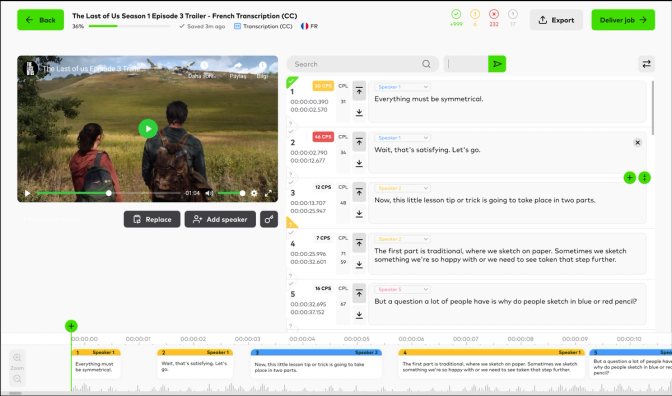
If you're already part of our community of talented translators, dive into Olabs to complete your assigned projects or explore our project pool for new opportunities.
New to Ollang? Join us, create an account, and showcase your skills through a demo. Our quality assurance editors will provide feedback to help you excel.