

AI-powered tools are gaining increasing prominence in content creation processes. Despite the immense potential they offer to content creators of all types, a pervasive question looms: Is AI taking over the Creator Economy? Will human creativity become a relic of the past?
In the following sections of this article, we'll look at how content creators use AI in their work and its connection to the creator economy. Furthermore, we will delve into its potential for streamlining localization solutions such as subtitling and dubbing, making content more accessible to a global audience. We will conclude by highlighting the importance of a harmonious collaboration between artificial intelligence and humans.
A Dystopian Future? Ethics and Overdependence on Technology
In discussions about the future, various perspectives emerge from different sectors of society, including tech users, industry leaders, researchers, developers, and the general public. Some individuals who see advanced technology as a potential threat to our future focus on two main concerns: copyright issues and an excessive reliance on technology.
The first concern relates to the responsible use of AI technologies. Generative AI can create new and original content, but it does so by learning from human data and patterns. To address this, it's crucial to establish strategies and regulations that ensure ethical AI use, providing fair compensation to artists and creators who contribute to the generative AI landscape.
On the topic of technology overdependence, some worry that it might stifle human creativity and lead to job displacement. However, it's important to note that AI lacks the deep imagination and contextual understanding that drive genuine creativity.
Then, What is the ideal scenario?
The ideal scenario, as proposed in the Harvard Business Review article "How Generative AI Could Disrupt Creative Work," co-authored by David De Cremer, Nicola Morini Bianzino, and Ben Falk, suggests that AI in creative work need not be seen as a threat. Generative AI, particularly when coupled with natural language capabilities, can enhance productivity by reducing the time and effort required for generating new ideas or text. Human involvement remains vital for the review and refinement of the AI's output, and this collaboration between humans and AI can lead to rapid progress in creative projects.
This vision offers a promising and inspiring perspective. Imagine a world where a symbiotic relationship between technology and humans opens up endless possibilities for content creation, enables more personalized engagement with audiences, and facilitates reaching global audiences by adapting content into multiple languages. Such a future seems to promise the best of both worlds, where AI supports and enhances human creativity, making the creative process more efficient and accessible. It's a vision that holds great potential for the future of content creation and localization.
Enhancing Content Writing, Image Generation, Localization and More
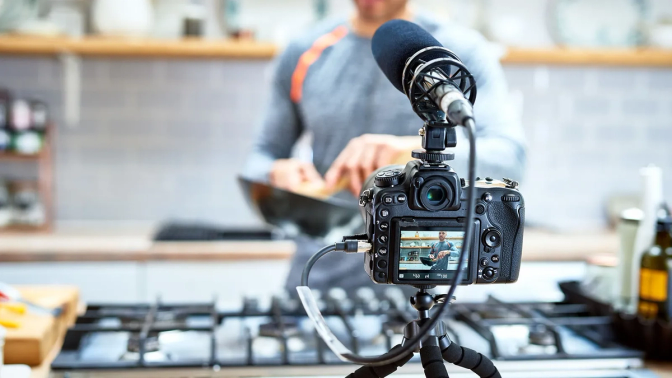
Credit: Getty Images
Whether you're genuinely interested in integrating AI tools into your creative process or simply curious about their potential, we've compiled insights on how AI is transforming crucial aspects of content creation. From generating and editing written content to image and video manipulation, data analysis, and facilitating accessible subtitling and dubbing, AI is reshaping the landscape for creators across diverse mediums.
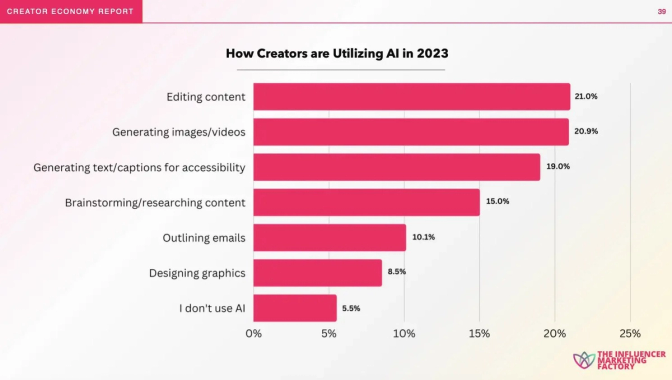
⇒ Content Writing and Editing By effectively harnessing the capabilities of AI tools such as ChatGPT, Writesonic, and Copy.ai, creators can unlock a world of possibilities. Picture generating attention-grabbing captions with ease, crafting unique content ideas, and refining your drafts to perfection. The Influencer Marketing Factory conducted a survey of over 600 creators in the US, and a striking 94.5% confirmed they employ AI tools. The top three applications they cited were content editing, image and video generation, and creating text and captions for accessibility.
Business Insider conducted interviews with various creators to discover their preferred tools and the specific purposes for which they found them valuable. If you've ever wrestled with creating brief and attention-grabbing social media captions, Estella Struck offers a solution. She shares her method for overcoming the creator's block by harnessing the power of ChatGPT. Her secret? Mastering prompts in the chatbot! Importantly, none of these creators view AI as a substitute for their creativity. Instead, they see it as a valuable tool that enhances their capacity for innovation, inspires fresh ideas, and allows them to scale their creative processes.
⇒ Image and Video Production and Enhancement Technology plays a pivotal role in image and video generation and enhancement. AI-driven image generators like Midjourney, DALL-E 2, and Stable Diffusion empower creators to surpass traditional editing software and bring to life captivating visuals based on their prompts. From conjuring imaginary landscapes to collaborating with AI on unique fashion designs, the creative possibilities are boundless. AI tools also elevate the quality of visual content by aiding creators in tasks such as background removal, color correction, and image stabilization.
Filmmakers and producers are increasingly embracing innovative techniques like text-to-image and text-to-video generation. These methods prove invaluable in crafting lifelike visual effects, automating laborious post-production tasks, and simplifying multilingual subtitling and dubbing processes. Another domain where AI promises to optimize efficiency is pre-production. Yves Bergquist, director of the AI and blockchain and media project at the Entertainment Technology Center at USC, notes, 'AI is rapidly making strides in enabling quicker and more cost-effective pre-production.' An exemplary application of AI in pre-production is automating the creation of storyboards. The impact of such advancements is substantial, reshaping the landscape of film production and offering intriguing possibilities for storytellers and content creators.
⇒ Idea Generation Struggling to come up with captivating content ideas? Don't worry, as AI tools like IdeaBuddy can be your creative partner. By harnessing AI's capacity to analyze audience preferences and needs, content creators can tap into a wealth of relatable insights and suggestions. Whether you're on the lookout for the latest trends in a specific niche or aiming to forecast trends within your industry, AI can offer invaluable support. With personalized recommendations and data-driven guidance, you can uncover unexplored opportunities and explore fresh perspectives for your content that resonate with your audience.
⇒ Data Analysis AI's influence extends beyond content creation itself; it also plays a vital role in data analysis for content creators. AI tools employ advanced algorithms to scrutinize diverse data points, including content views, clicks, searches, and more. This analysis equips content creators with a deeper understanding of their audience. Armed with these insights, creators can make informed decisions to refine their content strategy and strengthen their connection with their audience. Consider Jellysmack, a talent agency that harnesses AI technology to elevate audience analytics and content strategy. Through AI's integration into processes such as content optimization, A/B testing, retention analysis, and thumbnail generation, Jellysmack empowers creators to supercharge their growth and diversify their revenue streams.
⇒ Expanding Audience Reach through Localization In our increasingly interconnected world, reaching diverse audiences and ensuring accessibility is of utmost importance for content creators. AI simplifies the process of adapting content for global audiences, particularly through techniques like video captioning, subtitling, and dubbing. AI tools empower creators to seamlessly add captions and subtitles to their videos, making their content accessible to viewers with hearing impairments. AI-driven dubbing emerges as a superior choice for content creators seeking to enhance the viewing experience without the distraction of subtitles. Recent technological advancements have significantly improved AI dubbing, enabling better synchronization of lip movements and preserving the natural flow of dialogue. Collaborating with localization experts who utilize AI, creators can overcome language barriers and create a more immersive experience. These experts offer a wide array of realistic synthetic voices and voice cloning options using AI technology.
Human Collaboration Is Indispensable
AI-assisted localization thrives on the synergy between AI technology and human expertise. While automated tools offer efficiency and cost-effectiveness, content creators should not solely rely on them. Human translators and dubbing artists bring nuance and cultural sensitivity, ensuring a high-quality localized experience. Companies that prioritize the integration of AI and human expertise provide the best of both worlds.
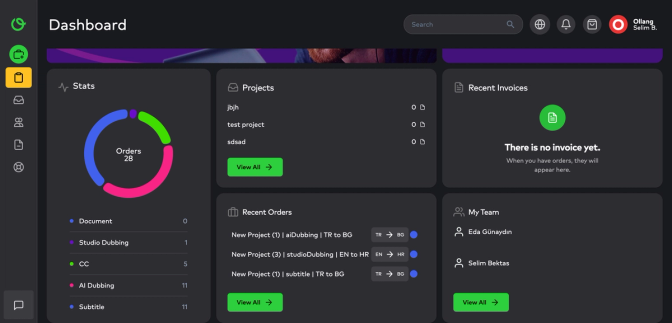
Olabs, our localization software tool, harnesses the power of AI and blends reliable automation with the human touch. AI handles a substantial portion of the work, producing precise translations. Our human experts then refine the AI-generated version to the highest standards. This approach represents the most ethical, business-savvy, and considerate use of AI for the benefit of humans. (For more details please see: Hybrid Dubbing: The Synergy of AI Efficiency and Human Artistry)